

Luca Dini has designed the world’s most sophisticated yachts and has since graduated to projects more ambitious than the 18-year-old who started his studio in his childhood bedroom would have ever imagined. From the Sea Force One to Sindalah, which are directly influenced by one another, interestingly.
The May 2026 newsletter celebrates the Italian innovator, who reflects on the last 30 years since launching his firm, but is also interested in what needs to be done in the three decades to come. How can we attract new buyers, and how can we establish new places for them to cruise in, all while showing the opportunities the leisure marine has provided to its workforce.
News-wise, Egypt and Dubai have announced plans to build operational marinas in coastal towns that are set to become cultural and social hubs.
The impact of Middle East tensions was evident in Ferretti Group’s first-quarter earnings report, while Sanlorenzo reported revenue growth from the region.
Thank you for reading,
Faisal
faisal@maritimeobserver.com

30 Years of Luca Dini: From superyachts to superyacht destinations, the Italian designer reflects on the evolution of the industry while paving the way for the future
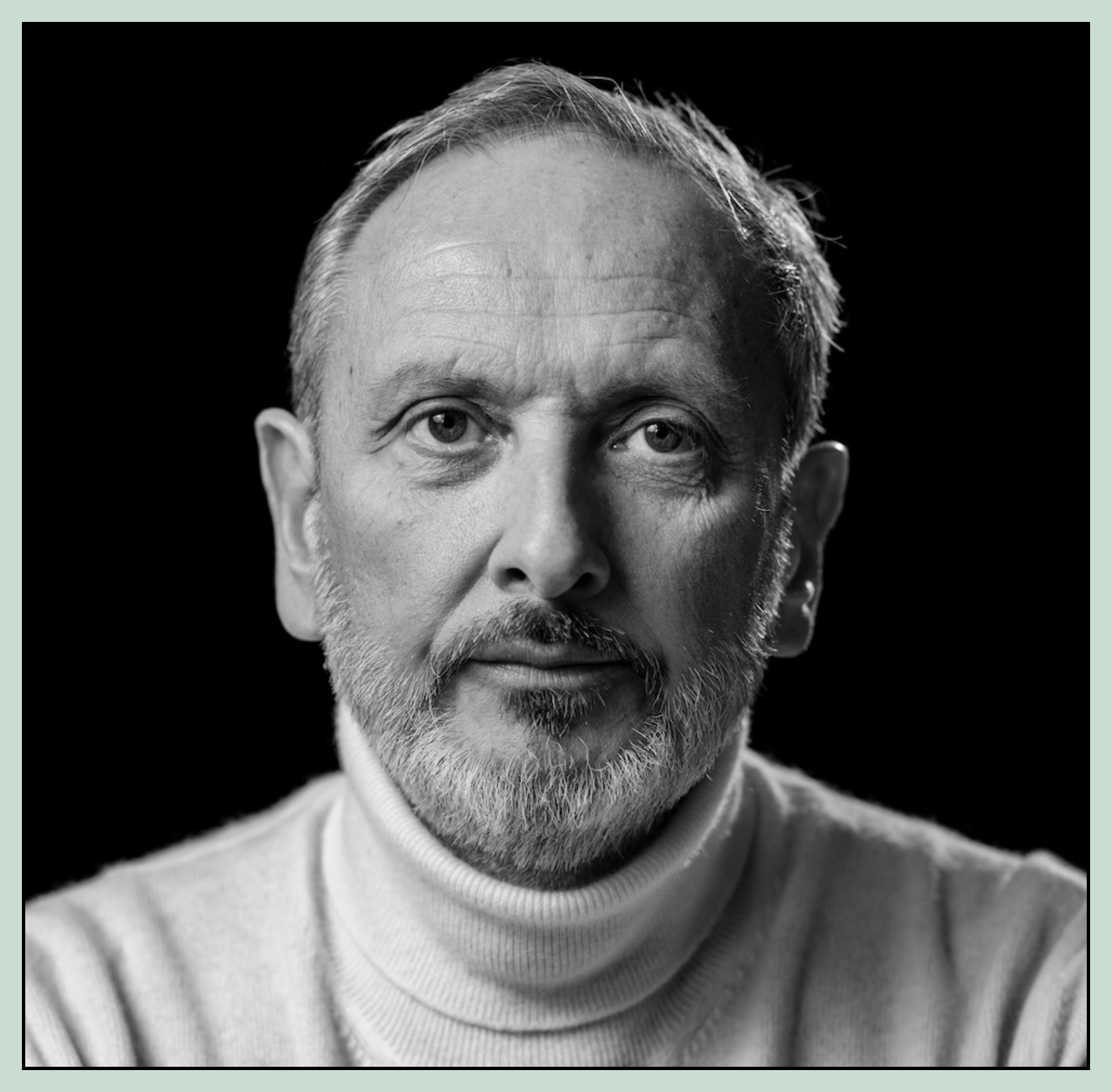
“You must be a truck driver, not a genius,” is not the first piece of wisdom you might expect to hear from one of the industry’s most decorated superyacht designers, but Luca Dini has always defied expectations.
Can Dini still be characterized as just a “yacht designer” these days, though? As he celebrates the 30th anniversary of launching his firm, LUCA DINI Design & Architecture, his role, which started with penning boat interiors and exteriors, has metamorphosed to an operation spanning land-based projects, both residential and hospitality, and has gone from conceiving of superyacht layouts to masterplanning superyacht destinations in countries such as Saudi Arabia and Albania.
With over 90 yacht projects under his belt, it is no surprise that he has not only sustained a four-decade career but has expanded his business so adeptly. His longevity is aided by his ability to evolve with every aspect of this industry: changes in owner profiles, changes in vessel design, and catering to new yacht destinations. Now, he’s sharing his insight on the shifting landscape.
A long way from running his studio out of his childhood home, Dini has fashioned a career that has gone further than his humble roots ever promised. Is it luck? He seems to think so. Not before curiosity and courage guided his actions.
Livorno, Italy: love at first sight
The moment Dini alighted on yacht design as his profession can be pinpointed to the 1980s in Livorno, Italy, where its citizens, including a teenage Dini going from home to school, marveled at the 85-meter Nabila, which was moored near the port for repairs. “I saw that boat, and I fell in love immediately, without knowing a lot about yachts,” he says. “From that moment, something started in my mind. I thought about how this kind of feeling that I have with these kinds of objects can translate to a job.”
From there, he received tutelage under famed Italian architect Pierluigi Spadolini, who, at an opportune time for Dini, decided to open up his practice to the leisure marine sector. “I didn’t know anything about design or architecture; I only had great passion. So I started to be with them, to listen and learn,” recalls Dini about his time there. “There is no university or school that can teach you this.”
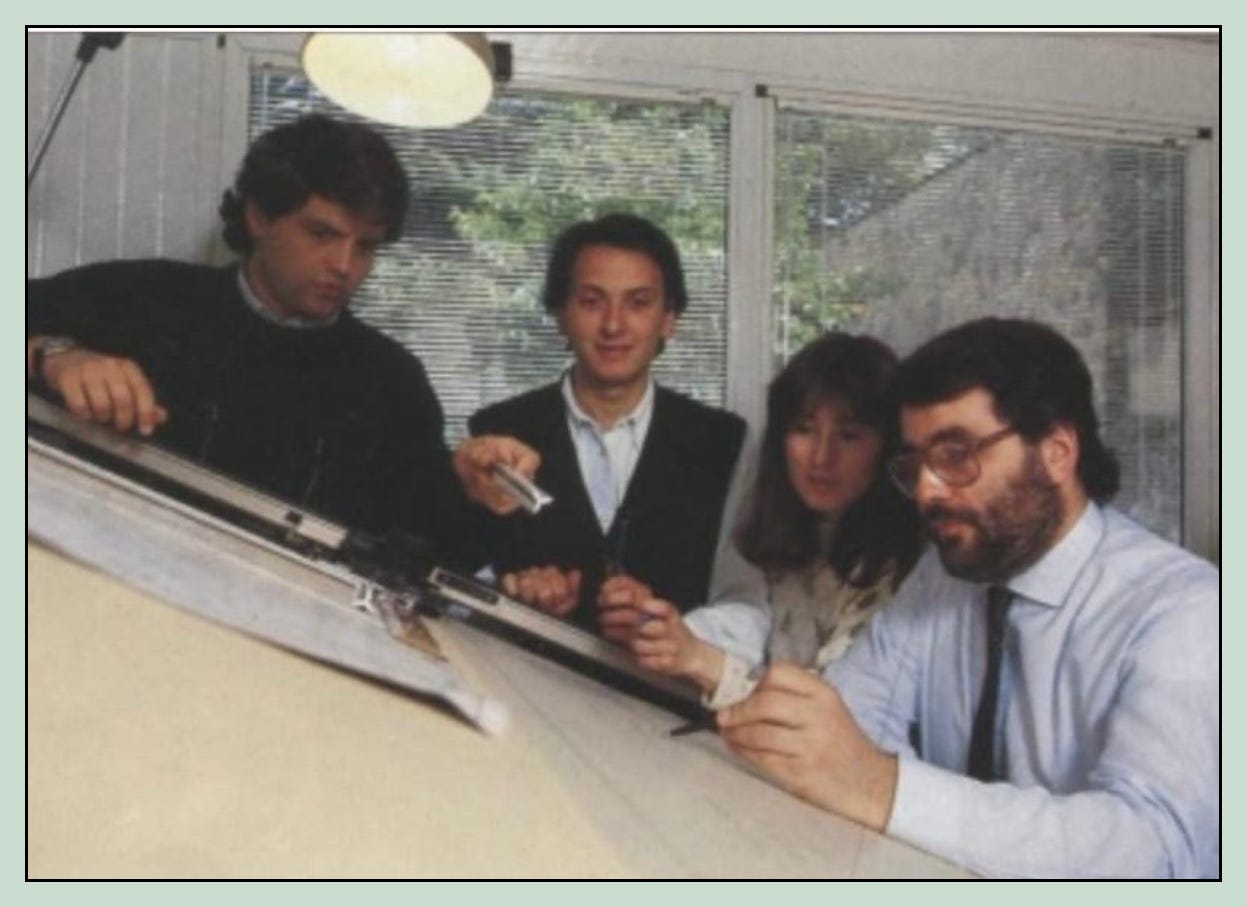
Over the years, Spadolini’s firm became a crucible for a generation of talents, including Dini and Francesco Paszkowski, who have revolutionized yacht culture. Dini would sweep into his ninth year at Spadolini’s firm before making the leap to launch his own studio, a decision that asked for sacrifices.
Far from his resplendent headquarters in Florence today, the studio’s early years began in his childhood bedroom, which served as Dini’s office. He had to be resourceful as he grew his business. With no external funding, selling his car to make ends meet, and enlisting his mother‘s ministrations as his secretary, Dini believes the lean times he had to endure set him up with unwavering resilience. “Nothing can scare you when you have this kind of experience. You can become a millionaire or billionaire, and you also have the possibility to go back to zero. Nothing can touch you.”
Industry Evolution: “The Flintstones era”
Two years into the nascent business, a breakout moment for Dini followed in short order when he made a statement with the delivery of CBI Navi’s Sophie Blue. Its exterior lines and color palette of her hull made the 41-meter stand out among the fleet of the time, an era that is a far cry from what exists today.
And to understand just how much industry output has evolved in the 40 years of Dini’s active career, the number of deliveries per year is a useful barometer. “When we started, shipyards produced 1-2 yachts every year and a half,” remembers Dini, who emphasizes that the largest yachts of that era congregated around 40-45 meters on average. “Today, we are currently working on 13 different yachts. At the time, [that] would’ve required eight years.” In August 2025, 588 vessels, over 30 meters in length, were in build, according to The SuperYacht Times.
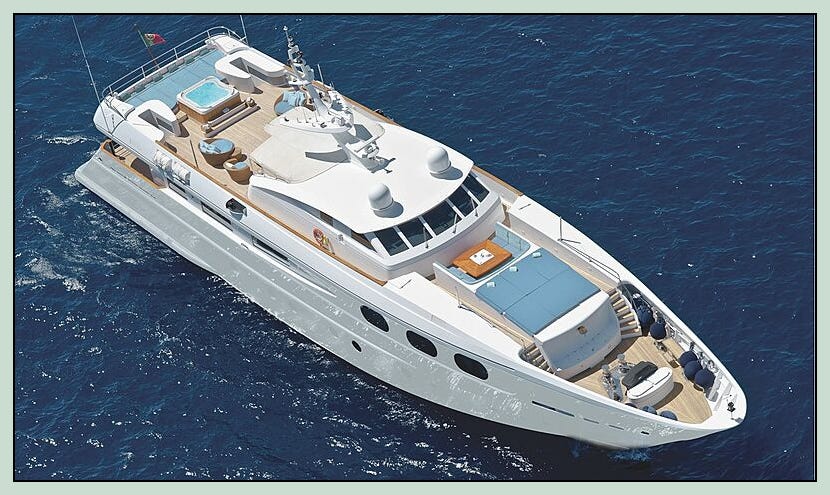
Since Sophie Blue, perhaps the biggest change in the design process is the method used. Back then, the first steps were an ordeal of pen and paper. “Everything was made by hand. It means that on your big table, you had the interior board there. And to see how the 3D model works was really difficult, because you have only your eyes to control.”
Has the advent of technology made life easier for the ones creating them, with their surgically precise renderings? Sure. But Dini speaks of these advancements with a note of caution, considering the expectations created. “With 3D, you have all the right dimensions, so when you create a render, it is the reality. If you arrive at the shipyard after two, three, or four years, you have to have the same image. That is the problem with AI; at the moment, it is a risk because everyone today can do it. But it’s not so accurate.”
Still one to go for paper instead of digital, Dini is a designer of the classic mold, which is how he remembers it. “It was a painting,” he describes yacht sketches of old. “At that time, with imagination, the owner was more prepared. It was a handmade sketch, not the reality, but he was ready to understand.” Yet the type of owner who had walked into the industry, as Dini would observe, has gone through as many changes as the design trends themselves.
The Client: Version 3.0
In 2021, the Genoa-based Tankoa Yachts harbored plans to create a new model that sought to put a new spin on contemporary luxury; sleeker, flowing lines with an emphasis on performance. So the builder partnered with Dini’s studio and, in 2025, as part of its Sportiva line, delivered M/Y Rose. The 55-meter boat features an open-air beach area, a large hull window aft, and a first-of-its-kind underwater Nemo Room. These characteristics are illustrations of the trends today’s yacht buyers are looking for post-COVID. But it wasn’t always this way.
Dini’s categorization of the different types of yacht owners throughout the years tends to be a Rorschach test reflecting what the vessel’s exterior and interior symbolized to each era. “In the late 80s, beginning of the 90s, the owners were at sea to travel with the boat. After that, most of the clients came to show how wealthy they were.”
The third wave of yacht owners, however, would only emerge following the COVID-19 pandemic. It was a shift observed throughout the industry, where the average age of yacht buyers has dropped by ten years, to 40-50 years old. Younger UHNWIs, enriched by a technology boom and entrepreneurial success, hold a different meaning of luxury, one that is experience-led and prioritizes wellness over wealth. “They want to have fun on board. There is more fun because the outdoors is where they live. It’s also all about the quality, the craftsmanship, and the pedigree,” explains Dini.
Looking to the future, Dini sees the majority of buyers gravitating towards the 40-60-meter size range. “What you can find in an 80 meter, you can also find in a 60 meter. It’s also simple to maintain.” This trend may be influenced by another characteristic of tomorrow’s yacht owner: greater eco-consciousness.
The Changing Tides of Perception
In 2007 came Tribu, a 51-meter built by Mondomarine with the indoor and outdoor design brought together by Dini and his team. For her minimal environmental impact, the expedition vessel was the first to be awarded a “Green Star” accreditation from the superyacht classification society RINA.
This period would be around the beginnings of the industry’s plight towards offering greener, more sustainable solutions. Less diesel, more hybrid. Solar panels and recycled materials beckoned. While efforts to become more environmentally friendly are progressing, Dini, pragmatically, is careful not to fall into greenwashing territory, believing that it is important to realize that becoming fully carbon zero is a long way away.
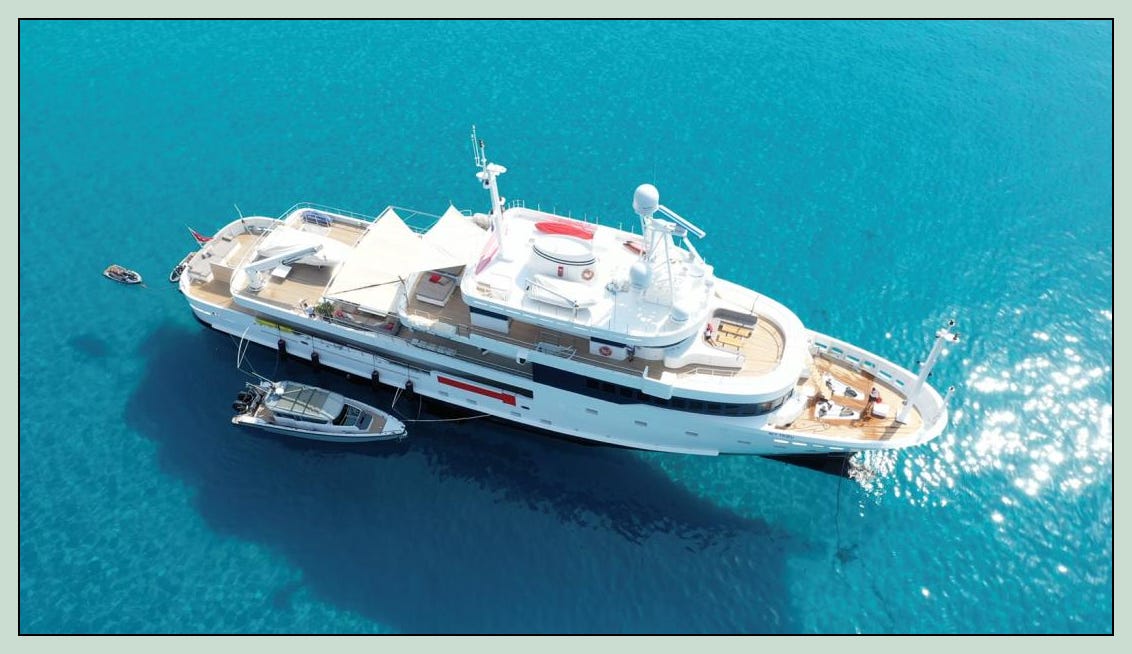
“First of all, it’s not logical on a yacht. You can say whatever you want. It’s not possible. That kind of technology, we are not ready to have. Every time we do the craziest design, we have to go back to the standard one because it’s also regarding the spaces of the dimensions. All the specific things in the engine room are very small.”
With the shifting worldview around luxury today, perceptions of the industry have shifted. Contributed by its environmental impact, the superyacht seems to have been designated as the poster child of profligacy, despite what it provides to the people making it possible. Dini is aware of both sides of the coin. “Doing a boat is absolutely not necessary. There is no doctor who says, ‘You have to buy a yacht today,’ no? It is something they do just for fun, but they involve thousands of people,” he explains. “I prefer this to someone who puts their money under the bed or keeps it in the bank.”
Currently, 168,000 people make up Italy’s yacht sector, which adds €13 billion to its economy. That’s about 0.6% of GDP. To reiterate this fact, Dini points to a small town in northern Tuscany. “Viareggio is based on yachting. An entire village based on the construction of yachts. Thanks to those dreams, many families are living and have a future.” Can Dini help give the industry a better reputation in front of the court of public opinion? “I cannot change the entire world. I can only change what happens in this office.” One of those changes in the office ended up catering to the establishment of new cruising grounds in different regions around the world.
What’s in a destination?
In September 2025, Dini’s firm signed an agreement with the Albanian government to develop a yachting hub within the country. This announcement follows a strategy by officials around the world who have realized the economic potential of investing in yacht tourism. This includes the Middle East, with established markets such as Dubai and Abu Dhabi, to emerging ones in Jordan, Saudi Arabia, Qatar, and Bahrain.
To build a destination, having a real yachting program is key. Dini believes the Red Sea holds great potential. “We have to start from the Suez Canal. [owners] are curious. They want to see new places,” he points to Saudi Arabia in particular. “You have a beautiful archipelago of 40 islands. That could be a tremendous experience for yacht owners. And you are lucky because you are close to the Canal.”
Fundamental to any cruising destination: investing in infrastructure. “You have to create a safe area. By that I mean, if I have a problem with the propeller, where do I have to go to repair my boat? It’s the same with gasoline,” says Dini. “You can destroy a destination in ten minutes. You have to pay attention to the strategy. Where do you want to go and what kind of people do you want to attract?” He had these questions in mind when approached to mastermind an entire island in Saudi Arabia.
A new chapter begins: on land
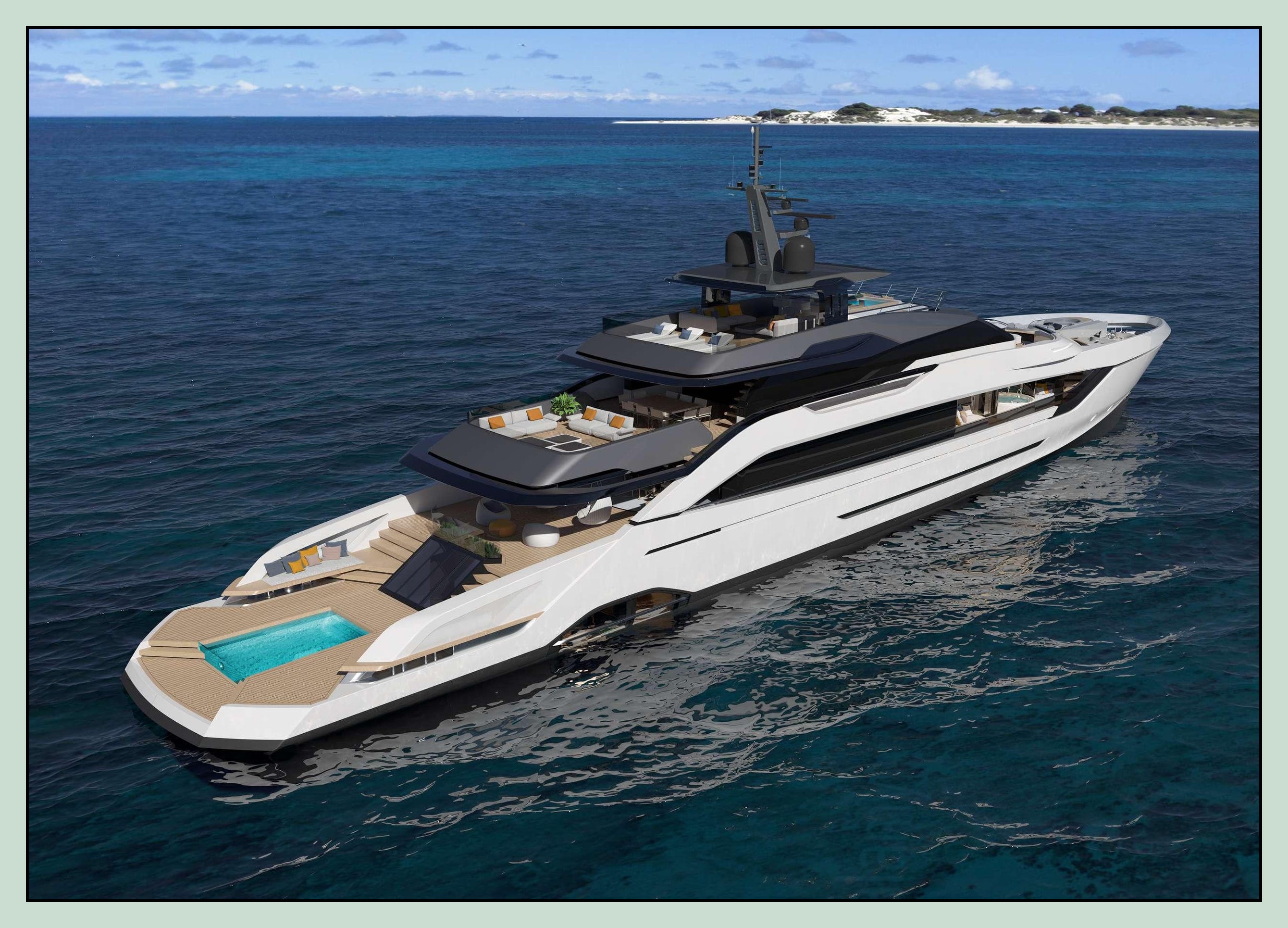
In the canon of Luca Dini-penned designs, perhaps no one project has become as seminal as the Sea Force One. Even 18 years removed from its debut, the 54-meter yacht is lauded for pushing the boundaries of yacht innovation, such as introducing the world to the concept of hydraulic platforms.
The Admiral-build was an example of what can be achieved when an owner and designer come together with a shared vision. “It’s one of the favorites in my career. I could write a book about all the crazy ideas we had,” recalls Dini. And then there were the interiors, where 15 artists were invited to create their paintings directly on board. It earned the distinction of being the first yacht to be featured in Architectural Digest magazine. And from a business perspective, the Sea Force One was instrumental to the growth of Dini’s company.
When it came to diversifying the business, for the longest time, Dini continued to pour cold water on a decision often taken by contemporaries of his rank: expanding to designing land-based properties for clients. “For 30 years in my career, I always refused to do it. I preferred to concentrate on the yacht business,” says Dini, who, despite this declaration, prepared for the moment his services in this province would be required.
That all changed when a gathering held onboard the Sea Force One directly gave Dini the chance to masterplan an entire island from the ground up. “This is what happened with MBS [Crown Prince Mohammed bin Salman, de facto ruler of Saudi Arabia]. After visiting the yacht, he asked us to do an entire city with 70,000 inhabitants. And the day after, I was ready with new offices, people, and teams.”
The decision ended up bearing much fruit, since the architecture arm of his business generates twice the turnover of yachting.
The firm, which started with Dini and an accountant. became a joint-stock company in 2018 and has bulked up to a staff of 70 members, with offices and showrooms in Florence and Forte Di Marmi, as well as a recently announced outpost in Riyadh. For Dini, a medium-sized operation is the sweet spot. “This is the maximum that I want, because after that, you become an industry. You need to cover and to recover the numbers,” says Dini. “I want the possibility to choose, I don’t want to be obliged to say yes to everyone that comes here with a proposal just to create a certain kind of income. This is not me.”
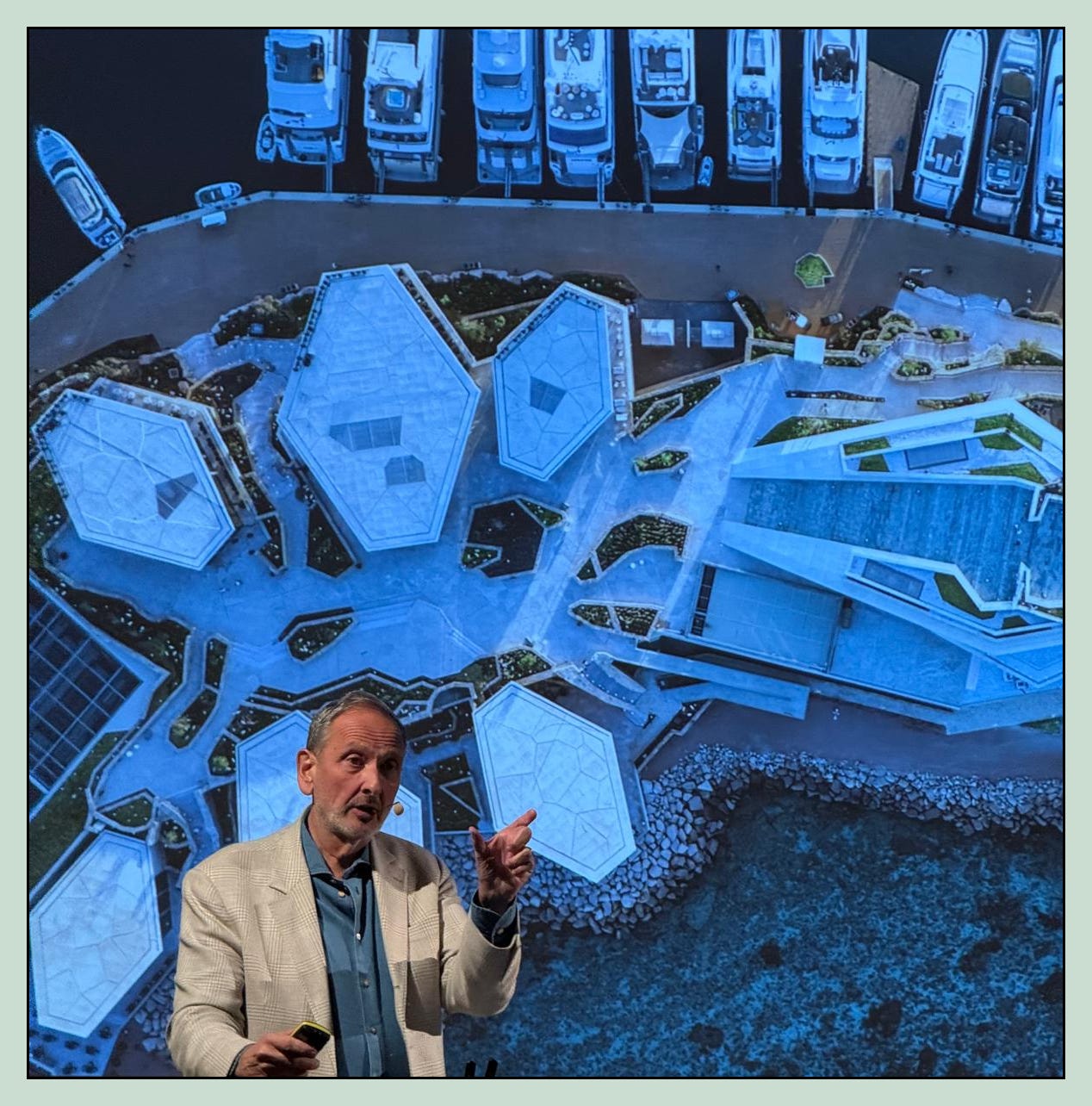
For aspiring designers who are taking their first steps in the industry in 2026, is it still possible to make a name in today’s landscape? “It’s difficult to enter, very difficult. It seems that it’s a large world, but it’s like a very small village. If you go to the boat shows, we are always the same faces,” says Dini, who offers his own advice for anyone wishing to break through. “If you want to really enter here and if you have this kind of passion, don’t only concentrate on school, start having your own experiences in a professional office or in a shipyard. Today, to be different from all the others, you must have experience in construction, architecture, engineering, and theory.”
Whether it is 1996 or 2026, the quality of putting in hard work remains the same, in his view. “You have to be ready to drive your car. Winter, summer, 70,000 kilometers per year, plus airplanes. So if you have this kind of attitude, maybe you have one possibility,” says Dini. “Don’t be afraid if you have passion, if you have the idea to create something. I’m the right example. And, you know, and after that, you must be lucky.” Retrospectively, Dini attributes much of his success to luck, but maybe it is the truck driver-like mentality in which Luca Dini’s genius lies.

· Gulf Craft Previews Majesty 145 ahead of delivery; starts sea trials
· Italian builder Ferretti Group reports decline in revenue and order intake for Middle East region
· Ras Al Khaimah’s Al Rams transformed into a Water Destination; development of marina
· Yas Marina receives “Superyacht Ready” accreditation, first in Abu Dhabi
· ORA Developers announce 204-berth marina in UAE’s Ghantoot community