

No period has upended the business of boat shows like the COVID-19 pandemic. The cancellation of major events in Monaco, Cannes, and Dubai was unprecedented, but also forced the exhibitors involved to think outside the box. Shipyards, brokers, and other parties utilized the available technology to create virtual spaces, and the resulting success called into question the value of traditional shows when online infrastructure worked just fine with a fraction of the cost. The return of in-person showcases in the ensuing years disputed those misgivings, when boat shows proved their mettle in uplifting the global industry.
Now, the shows planned for the regional nautical calendar will be critical in setting the stage for the upcoming Middle East boating season. The Middle East yacht market, which has weathered a challenging 2026, feeling the pain of geopolitical tensions, will welcome three boat shows this November. Their proximity has raised questions about what each has to offer and whether they can co-exist to give the sector an injection of momentum.
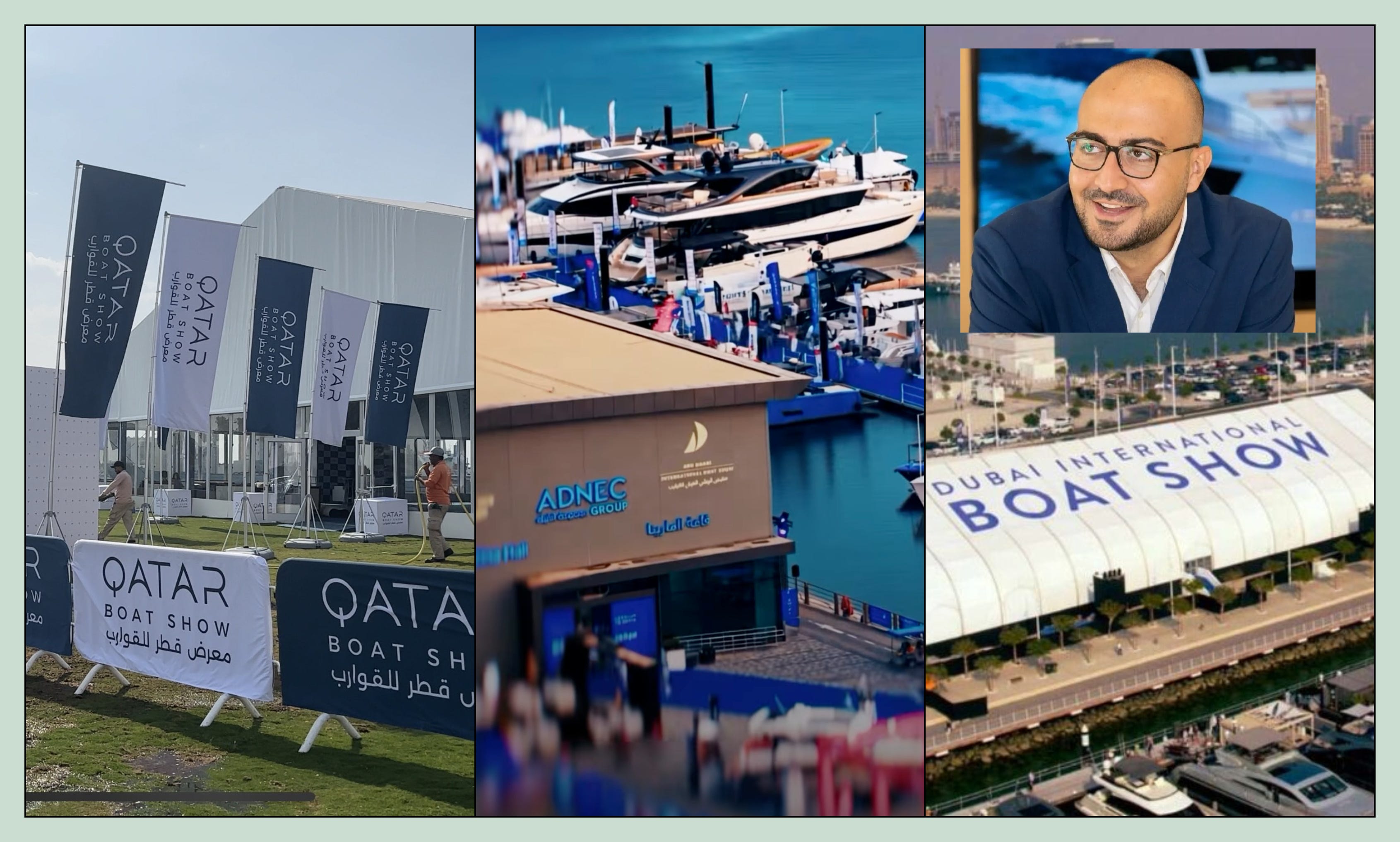
One exhibitor with a busy itinerary is Mahmoud Itani, founder of Yacht Finds, the region’s first online marketplace. He’ll hit Doha for the Qatar Boat Show on the 4th, jet to Abu Dhabi for the Abu Dhabi International Boat Show from the 19th to the 22nd, before landing at Dubai Harbour for the Dubai International Boat Show, which will hold its 32nd edition in its new Autumn slot to close out the month.
He joins the Maritime Observer Newsletter to take the temperature of the local sector, the different roles of boat shows, and why their placement in the year matters.
Thank you for reading,
Faisal

“Seldom will you buy a boat off of a brochure. “ Yacht Finds co-founder Mahmoud Itani discusses upcoming boat show season, berth shortage, state of yachting market
It’s been a challenging year for the Middle East yachting market. We have just seen Ferretti Group report a 36.5% drop in order intake for the regional market; what is behind this consumer hesitation?
The market is still in a slowdown. It’s not recovering, and I don’t see it recovering anytime soon.
Unfortunately, the reason is that people are a little bit skeptical about spending money. The whole environment, the situation that we are living in, is not enticing them to buy, let alone bring in boats from abroad. Insurance and shipping costs have become a huge part of the logistical challenges for boat ownership, especially when we’re talking about foreign brands.
But the difference between this crisis and the previous crisis that we had is that people have money. So what we are seeing, at least in the past few months, in the UAE, is that purchasing decisions have become more towards bargains.
Local brands can still be transported, whether they’re small boats you can transport by land, or big boats you can transport along the UAE coast.
As for appetite for buying luxury yachts, whether it’s from Ferretti, Azimut, or Sanlorenzo, if they are not going to be using it, or shipping it to the dock, they might keep it in the Mediterranean.
Unless the dealer is willing to give away all of his dealer margin, or at least give away the majority of the dealer margin - in addition to discounts from the shipyard side- it’s very difficult to see anything moving.
But with new boat sales, this will be challenging for the foreseeable future, especially when we don’t see a solution coming up anytime soon.
Who is feeling the pressure the most?
The dealers and the brokers are feeling this pressure. Especially when they signed up with a shipyard/ brand that forced them to buy stock - or otherwise lose the dealership - it puts them under pressure.
The other pressure is the ongoing cost that they have to pay to keep their offices open, keep their service centres open, and keep their team.
They have to pay for these costs one way or another.
Add in the fact that everything has inflated: costs of fuel, cost of living, everything has gone up.
So I would say that the dealer is the entity most under pressure.
Of course, everybody is affected one way or another, but if they provide after-sales or management, for example, then maybe they can offset their own costs by providing other services to their clients.
How important is the upcoming boat show season for the Middle East market? What is the main goal? Is it a benefit to have three of the events so close to each other?
Every boat show has its own agenda, especially in the region, and I separate them into two categories: a tourist boat show and an economic boat show.
Economic shows like Düsseldorf, Monaco, and Dubai happen at the end of the season. Tourism shows happen at the beginning - shows for brokerage, charter, or those who are looking to buy. This is why you position these shows at the start. Shows like Dubai, you position at the end of the season because people plan their purchases, whether it’s from the dealer or shipyard, for the upcoming season.
Dubai is not only a brokerage show, but it’s also a builder show. You are increasingly seeing more and more shipyards in the UAE.
The Dubai Show is a trade show, while ADIBS is for Abu Dhabi people - their focus is on fishing boats p, runabout boats, day boats, and so on. So, these segments of the market are different.
With all the new builds being manufactured, is marina capacity still a sore point?
It takes a few months to build a boat, but it takes years to build a marina. So the ratio is very far apart. That said, there is a lack of spaces for big-size boats, 30 metres plus. And there is also a lot of space for boats below 20 metres.
We are in need of marinas that support superyachts. Not necessarily very super luxurious marinas that make it impossible for you to berth your boat.
Many of the marinas announced are part of waterfront developments. Is this trend proving beneficial to the stakeholders involved?
When you have a marina at your doorstep, it adds value, increasing it by at least 15-20%
Emaar, one of the UAE’s largest developers, has been building a lot of towers and residences around the marina for 5 years, and slowly, as we see those developments coming up, we also started seeing an increase in the number of boats occupying the marina in Port Rashid, for example.
Looking ahead, what do we need to do to ensure desirability for younger generations?
I think there’s still a lot of room for improvement. There are still a lot of things we can do that can improve the presence of, or at least the appeal of, boating to the younger generation. They become more and more cautious about the environment, and they’re also becoming more demanding.
They have healthy practices and activities that their parents neglected for a while because they thought it was not part of their routine. [They] are more interested, for example, in short-term usage of the boat rather than long-term usage.
Let’s switch gears; it’s been a few years since you launched Yacht Finds. What drove you to take on the project, and what gap did you see?
Yacht Finds was built because there was no platform that connected people with each other. There’s no platform that connects boat professionals with buyers, or buyers with dealers, to display their stock - except for a local classified website where you list everything, including your closet, your dishwasher, your car, your house.
And this is where Yacht Finds was born, with the idea that we need to dedicate a platform where people can connect with each other.
Are there any challenges you see with communicating to the Middle Eastern audience?
In terms of listings, it was challenging in the beginning, at least the first 6 months, to acquire listings or to invite people to list their boats, even though it’s free,
I think it took us 9 months to get 100 listings. But since the ninth month until today, we’ve had 400 listings. The amount quadrupled.
So the first part was difficult, but then when people started seeing the value of it, started seeing how it works, started seeing the promotion behind it, they started to trust the website. And today we’re sitting at 450 listings.
It’s increasingly becoming more of an international website. From the beginning of this year, we’ve started seeing more visitors coming from the US, Singapore, and Japan, browsing the website.
And regionally, we’ve started seeing more people spend time on the website since the start of the conflict.
You took Yacht Finds all over the world, promoting it at events in Europe, Asia, and everywhere in between, so to tie this interview together: do boat shows still carry weight? What is their role in 2026?
There’s always value in doing boat shows because it’s an excuse to ask people to come and see boats they’ve been interested in and talking about over email and WhatsApp for a long time.
Seldom will you buy a boat off of a brochure. Unless you’re buying one that is readily available, you still need to come and see it.
The KPI for boat shows is not the quality of people; it’s the quantity of people. The boat show is not just for buying boats. It could also be a place to mingle, network, attend events, and buy equipment. There is a variety of people who come to the show who are not necessarily boat owners or buyers.
This interview has been edited and condensed for clarity.
