

Is there a retreat for Chief Executives of superyacht builders? It would probably be beneficial to start one, for it is a position only a select few can understand, leading an enterprise in an industry so peculiar that trends from other parts of the luxury world are not applicable.
In recent years, the job has also grown even more pronounced. The market has expanded greatly, reaching an economic value of $61 billion, ballooned to over 6,100 superyachts over 30 meters, and has seen the entry of younger buyers, of tech and AI wealth. Throw in the macroeconomic factors and the increasing involvement of private equity, and the trappings of a CEO in the industry are a far cry from just a decade ago.
Just ask Erwin Bamps. The last time he joined the newsletter, he was only a few months into his role as Chief Executive of Gulf Craft, his second appointment. The Belgian-born Bamps first joined the company in the early 2000s, eventually becoming CEO in 2014. After his departure, and a brief stint at the French yard Group Beneteau, his return to the UAE-based builder was announced in May 2025, and with a different set of objectives this time around.
At the center of his priorities is internationalizing the brand, discerningly building a global network of distributors and focusing on the production of the shipyard’s lines - Majesty, Nomad, Oryx, and SilverCat.
This was only one strand in his briefing. In the spring, the builder launched the Superyacht Service Centre, its refit and maintenance facility in Ajman, UAE. The timing is convincing. The refit market is experiencing a surge in demand, approximately valued at $6.8 billion in 2025 and forecast to climb to $12.4 billion by 2034.
Below, Bamps sits down with The Maritime Observer Newsletter to reflect on his first year back, the strategy behind reimagining the Majesty line, the newfound appeal of catamarans, and what to expect from Gulf Craft in the upcoming fall season.

Esprit Digital Agency, a creative digital agency specializing in the yachting, design, and lifestyle industries.
This edition is presented by Esprit. As the digital communication arm of Sculati & Partners, Esprit creates impactful brand experiences through strategic storytelling, social media management, content creation, influencer marketing and digital campaigns. The agency combines creativity and expertise to help brands build visibility, engagement, and lasting connections with their audiences.
Visit www.espritdigitalagency.com for more.

Gulf Craft CEO Erwin Bamps is ten steps ahead: His first year back, recent launches, the secrets to building a distribution network, what’s in store, and why the yard remains one of the most underestimated.
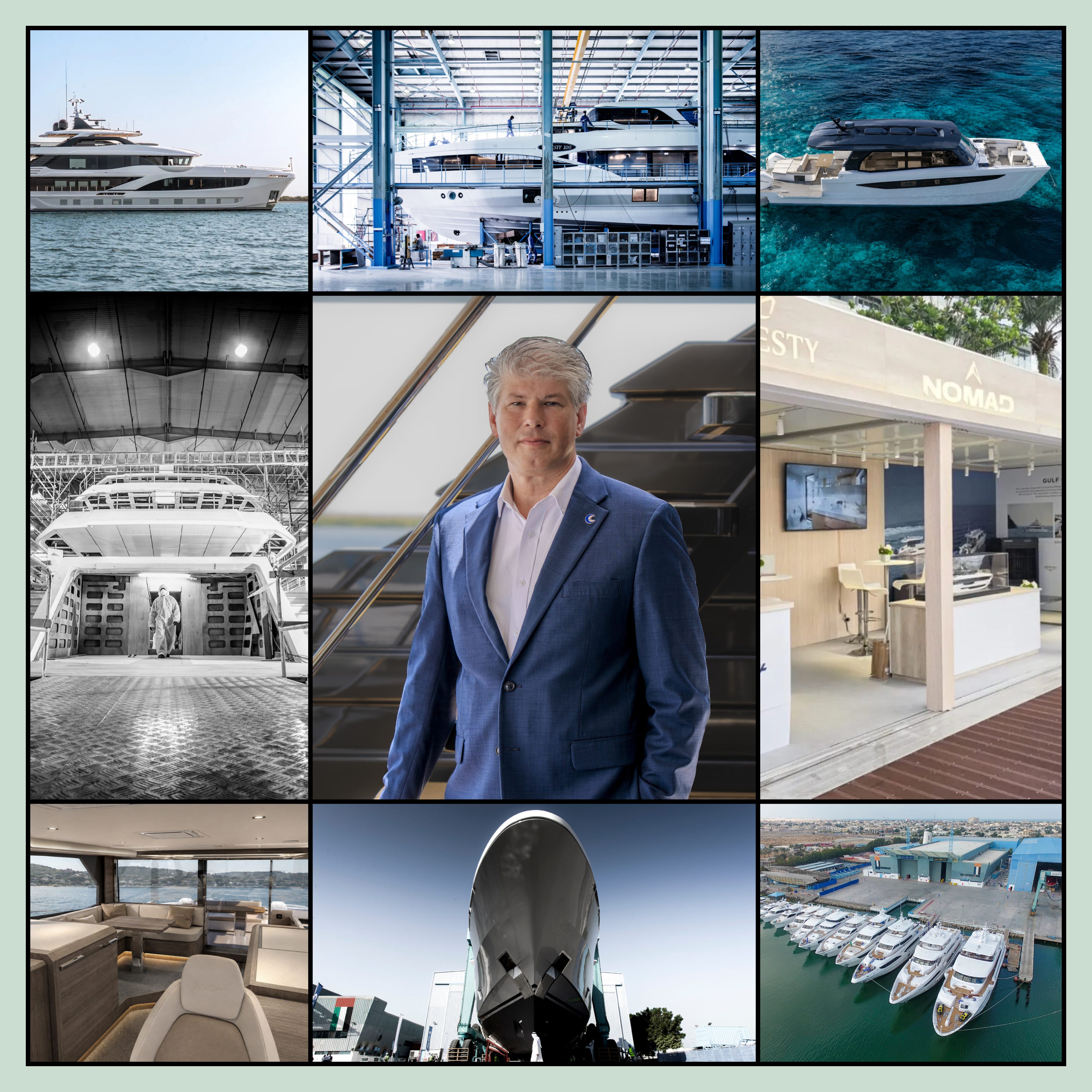
The last time you joined the newsletter, you were a few months into your return. How did your first year back compare to your l tenure as Chief Executive the first time?
In 2002, the challenge was about building up the skill set and recognition. And not just for the brand; it was building recognition worldwide for manufacturing. Even in the Middle East, people didn’t think of boat building, so we had to talk to people about the skill set that’s available here. There was a very limited understanding of the ambition of the Middle East in terms of manufacturing.
So the challenge now is not to prove those points; we have that skill set. Now, the idea is to internationalize even more, globalize product distribution with a partner network and a dealer network, and to build on the next generation of products in order to scale the business to another level. I think we’re still one of the most underestimated boat yards in the world. So I think we owe it to ourselves to make a little bit more noise.
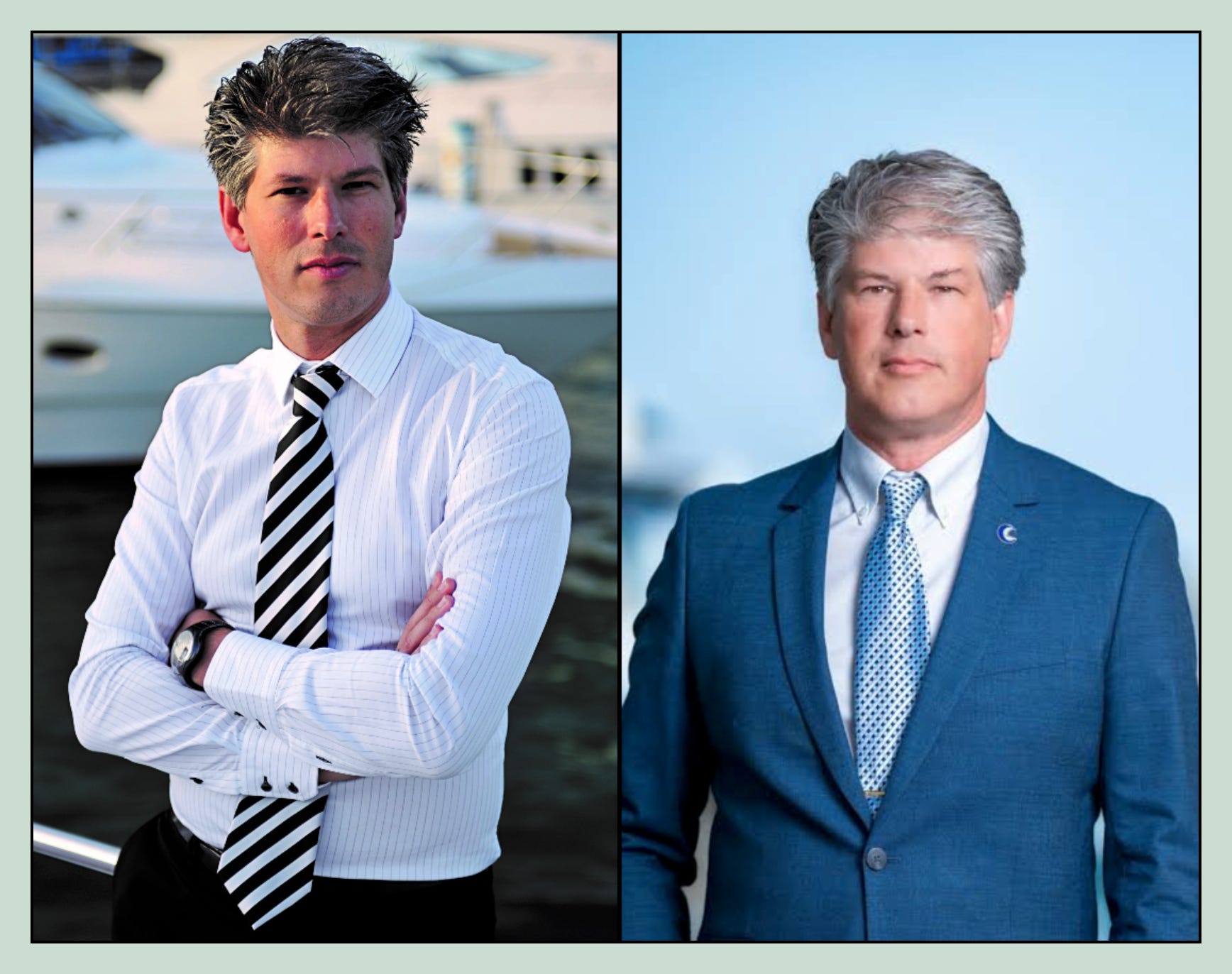
Is there anything you learned in your time away which helped during this go-around?
When I worked in France, I was working for a full-fledged production boat builder, but highly automated with staff that was hired from the car industry. So you can imagine the kind of discussions you have in meetings, very different than the ones you have in a meeting room where you talk about projects, whether it’s a Feadship or a Lurssen or a Gulf Craft. In France, we’re talking about products. But which model is better? It depends on whether you can be successful; either model works fine.
Here we have some of our priority ranges, which are also semi-production: the Oryx and the SilverCat; smaller products. But then on the top end, we are personalizing our product far more than most shipyards do.
Either way, you can learn from the one who builds more mass-produced items, and there are some very good best practices that you can still apply to the ones who build more projects than products. And the other way round.
One addition to Gulf Craft’s offerings is the SilverCat line. What do you make of the rise of catamarans and what is driving its growth?
The SilverCat line was developed because there’s a growing appetite for catamarans.
Why? Catamarans are not new, but have been finding an increasingly growing client base because people have started to appreciate the deck space. People are less interested in the faster speeds that you usually get from monohulls; they’re more interested in entertainment, space, and comfort.
They offer two main benefits. One is the inherent stability, because you have a wider platform, so it rocks less. Second, it gives you big space; whether it’s downstairs or upstairs, it doesn’t matter, but it’s your entertainment vessel.
It’s a growing market, and what has helped the catamaran market is that the size and the power ranges of the outboards have drastically increased over the last 5 to 10 years, allowing now for a bigger boat to be pushed efficiently without boards, as well. And so, the evolution of outboard engines is set to boost interest in catamarans.
I see a big future because I see that the young people of today and the people who are buying are not 65 years old; they are younger generations.
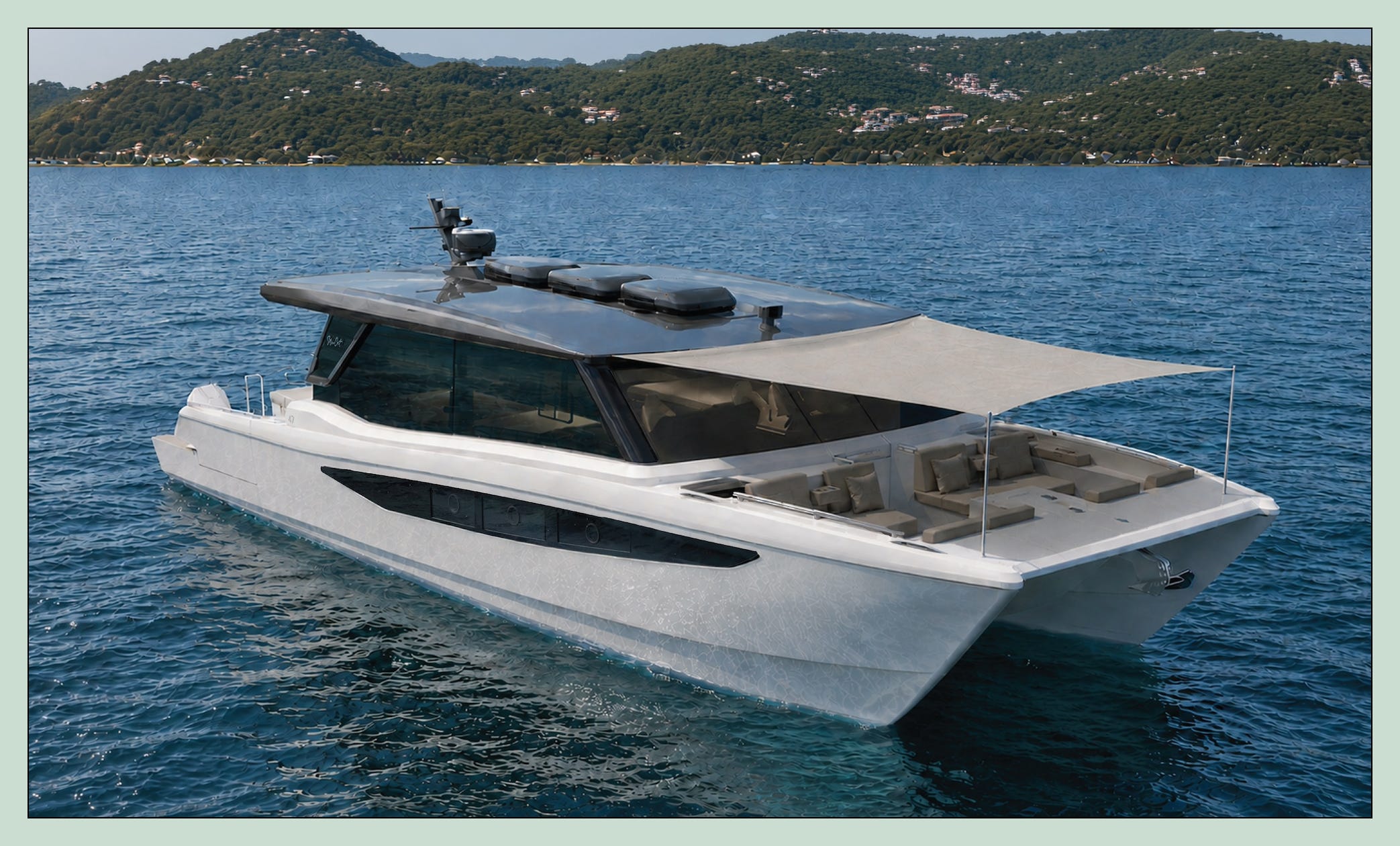
Tell us about your plans to expand the SilverCat brand in international markets where the Majesty line may be more familiar. How are you approaching this challenge?
First, you need to have a product. And so when we were putting pictures up, as we’ve done in the last few years, of the SilverCat, the predominant people who were liking it were male fishermen, but the majority of the market potential is in family-style boating, or where, one time, you go with the boys, and the next day, you take the family out. Most of the new deals we’ve signed up over the last 4 months are all for SilverCat.
When you look at the charter market, one of the things we notice around the world is that the time people spend chartering a boat is reducing. People just have less patience, less time. People want quality, not quantity. That’s why you saw them a lot in the day charter markets.
Markets like the Caribbean, Australia, places where you try to rent a boat with 10 other friends, and you just go and enjoy, and don’t bother to stay on board during the night, and you’re not planning to go to the other end of the Mediterranean.
We also see Majesty dealers now saying, ‘Could we add this brand to our dealership agreement?’ And they start to explore what this has to offer to their clients, who are thinking of moving up into yachts, but actually what they’re looking for is an enclosed entertainment area for when it’s too cold or too hot, and a beautiful deck space that allows them in the afternoon to snorkel, to do paddle boarding, to jump in and off, or do some sunbathing, I see that the interest is growing fast.
Speaking of dealership agreements, the past few months have seen a stream of new partnership announcements all across the globe. So, touching on the business model, what goes into building a robust distribution network?
When we’re building a teasing campaign, we see the majority of the people reacting are the business-to-business type people. They’re the ones who see there’s an opportunity to complete a portfolio of products. Most of the dealerships worldwide are multi-brand, but not all of them have a similar product line under their belt.
We see dealers who are hungry for new business opportunities or market niches reaching out to us and saying, ‘Would you mind considering me for the dealership?’ Then how do we select this? Well, we check: what is the company policy? How long is the business? Do they have a marketing manager? Who is the sales team? Do they have a clear idea of what this market is about and what the objective is?
There is not a lot of competition for this product range worldwide. So we find there is a lot of opportunity with existing, well-established leaderships, and just offer them an expansion into a new market. Some of the best yacht dealerships in the world do not have a powerful power catamaran range with a strong vision and ambition.
What you see today is just the beginning of SilverCat.
Turning our attention to the Majesty line, we see it has undergone significant evolution over the last few years, particularly in terms of design. How did you use this strategy to attract foreign clientele?
We are not focused on the Gulf; we are not focused on Europe. We are focused on the ability to sell globally to very different clients. The issue is that people think that there’s one type of client on the outside; there is not; there are not even five. There’s a lot more.
Majesty is not only linked to one designer. With the different identities over these different design offices, we wanted to infuse Majesty not with one culture, but with different design cultures at the same time.
We have Cristiano Gatto from Italy, but then the Majesty 100 Terrace is designed by Phathom Studio, a Dutch company. And so we work with different designs for different product ranges, not to be identified as trying to be Italian when we’re not Italian, or trying to be Dutch when we’re not Dutch.
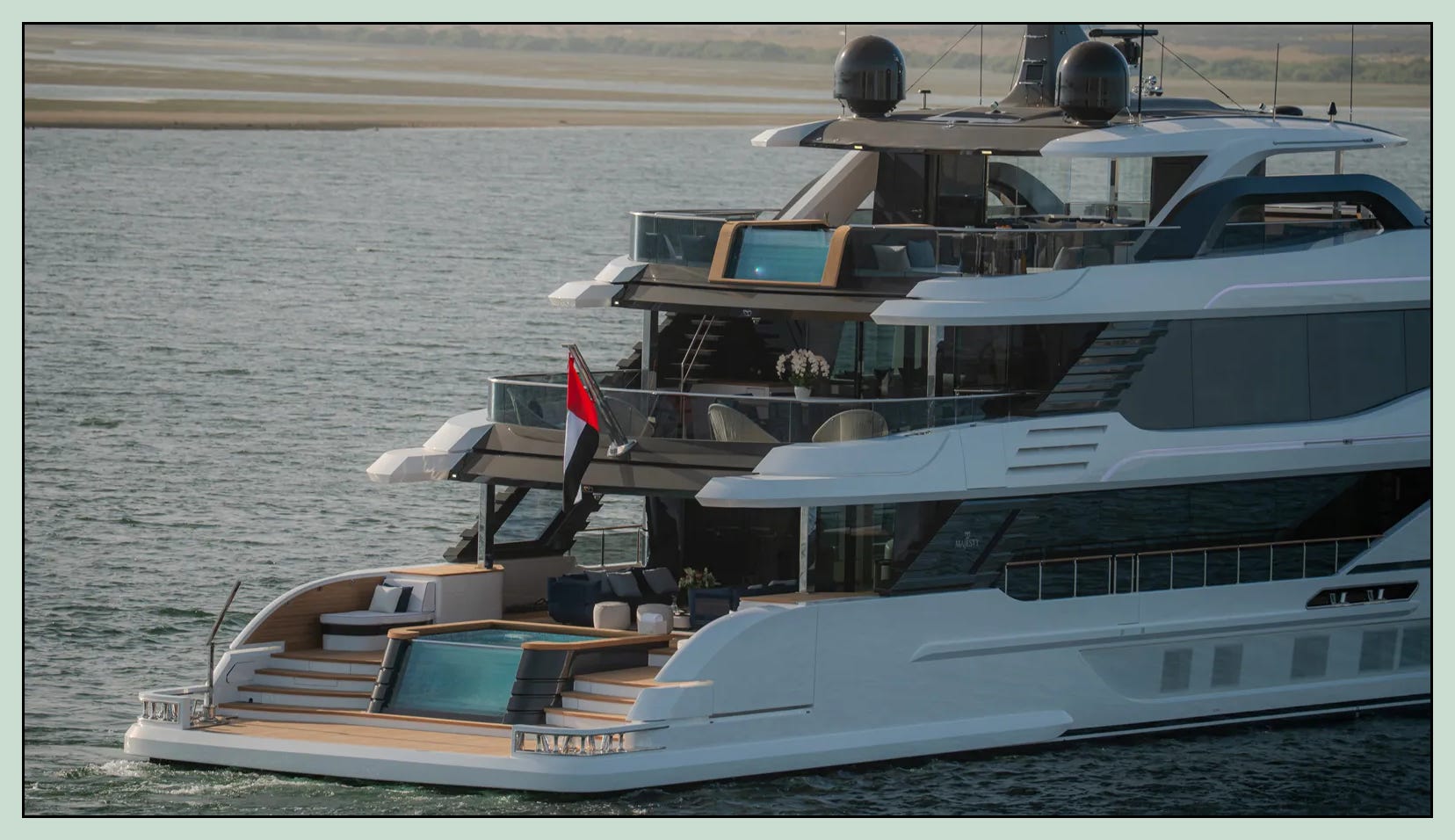
Today, the Majesty 100 offers a chance for a higher resale value because it’s multi-purpose, multi-use. You have interesting features where people’s concern about big yachts is privacy. Because the bigger the boat and the more the crew, you actually lose an aspect of luxury privacy. So the idea on the Majesty 100 Terrace was to retain privacy while increasing the number of crew. All of this together gives you the features, and it gives you the competitiveness. It allows you to respond to different markets and different customers because now you can also respond better to a global clientele.
This year, Gulf Craft launched its first refit facility. Can you touch on this recent surge in demand for maintenance and refit services, and where it’s coming from?
You don’t want to bring your big yachts, even if it’s a superyacht, to a refit facility in Florida if you’re based in France. You just don’t do that unless you happen to also use your yacht next season in the Caribbean.
So, what we focus on is the yachts that are around the Gulf area, from the Red Sea all the way to Southeast Asia, to Kuwait. So that is our focus market. We also have yachts refitting in the Maldives [which are] based in the Maldives.
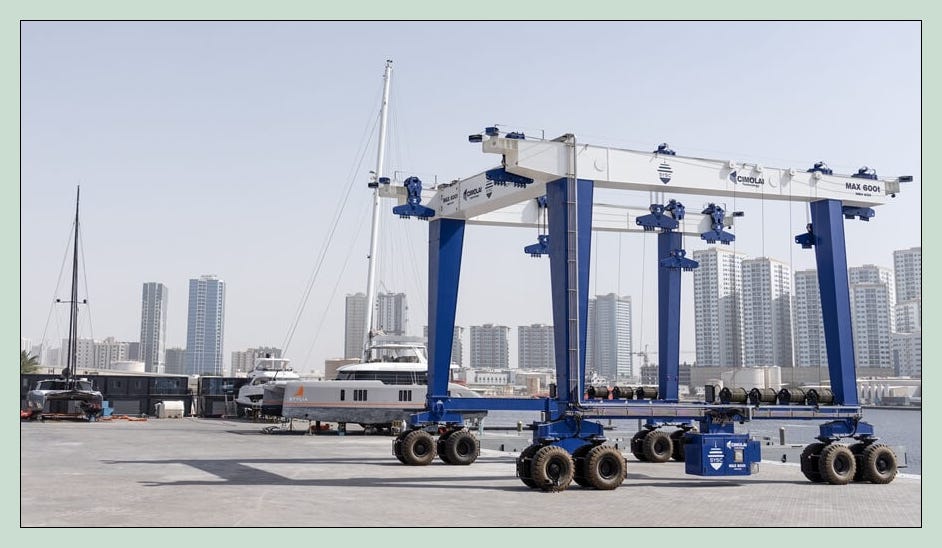
But the majority of the work is going on in our facility in Ajman, under SYSC. And that facility today caters, therefore, to that region, and it is not really important whether the owner is European, or Kuwaiti, or somebody from the UAE. Whoever has a boat in that area, or is passing by and staying for a season, we see the people coming to us. So we see a mix of nationalities.
During multiple parts of our conversation, you alluded to the future, and thinking about tomorrow’s buyers. We can see that many of these owners are going younger, so how are you catering to the up and coming generation?
Life is fast for the new generation. People that are now growing up and have decided that maybe they want to spend some money on a boat. They have a different experience and expectations.
We are seeing that people are shifting from the Oryx to the SilverCat - to the slower pace of living. You need to create today both as a platform to allow you to have no plan.
You have comfort, so that you don’t have to worry so much whether there’s a wind picking up; still, you’re comfortable on board. If you want to go back to shore quickly, you have the engine power to get you there.
People are looking for its convenience: easy to operate, easy to maintain, easy to find everything.
So that is the challenge for this generation of buyers: how to make boat ownership operations not a headache, but an enjoyment. And that’s a tough one. It’s a very tough one.
Is there anything you can share about what Gulf Craft has in store for the upcoming boat show season?
We are expecting quite an exciting season for all our brands - from Majesty and Nomad yachts and superyachts, to Oryx cabin cruisers and SilverCat power catamarans.
We have the [Majesty] 145 that we want to show to the public. It’s in the water, out there, leaving for Europe.
We have a [Majesty] 160 that we’re splashing in the water this autumn. Of course, the [SilverCat] 47, which we are teasing. There’s another SilverCat model going to be announced. We teased one; there’s a 2nd one coming in the next few weeks. There’s a new Nomad 70.
We’re in a market where you sell the dream; it’s all about innovation, excitement, and new features, and the wow effect. We sell real estate on water.
Final two questions. First, is the best piece of advice you’ve received for this job? For the CEO role?
Always expect the unexpected.
And what is your favorite part of your day-to-day?
It’s a people’s business. And the most exciting part of this business is the people you meet, not a product you produce. The product is just something that you create when you meet people, and you see how they want to enjoy life, what they’re looking for.
If you learn to put a smile on their face, then you have achieved something that others may not be able to. That is what we get out of this business. We don’t see our customers as transactional relationships; we see them as relationships, full stop. The customer you sold to once means a relationship for life.

· D-Marin named Marina consultant for 204-berth BAYN project by Ora Developers
· Gulf Craft appoints Greek dealer Sunsea Yachts for Majesty line
· Wynn Al Marjan Island opening pushed to September 2027
