
Study the superyacht industry in amber, and you’d discover a common throughline in any cruising grounds that witnessed activity: they offer provisions to service the superyachts coming in.
And now, with the Middle East proving to be an emerging yacht market, refit facilities are starting to spring up and are doing so at a time when the refit industry as a whole is soaring. With the growing superyacht fleet, demand is surging in proportion. But does the region have what it takes to find lasting success in this domain? This is the thesis of this month’s feature, where I canvassed the people in the heart of the game to explore the evolution of this sector and its challenges, too.
In a packed news front, Saudi Arabia’s AMAALA shared an update on an opening date, Kuwait returns with a new boat show for 2026, Abu Dhabi International Boat Show organizers extend their alliance in a new three-year deal, and BWA expands Middle East reach with a Dubai outpost.
Thank you for reading.
All the best,
Faisal

The Middle East, Your New Refit Destination?
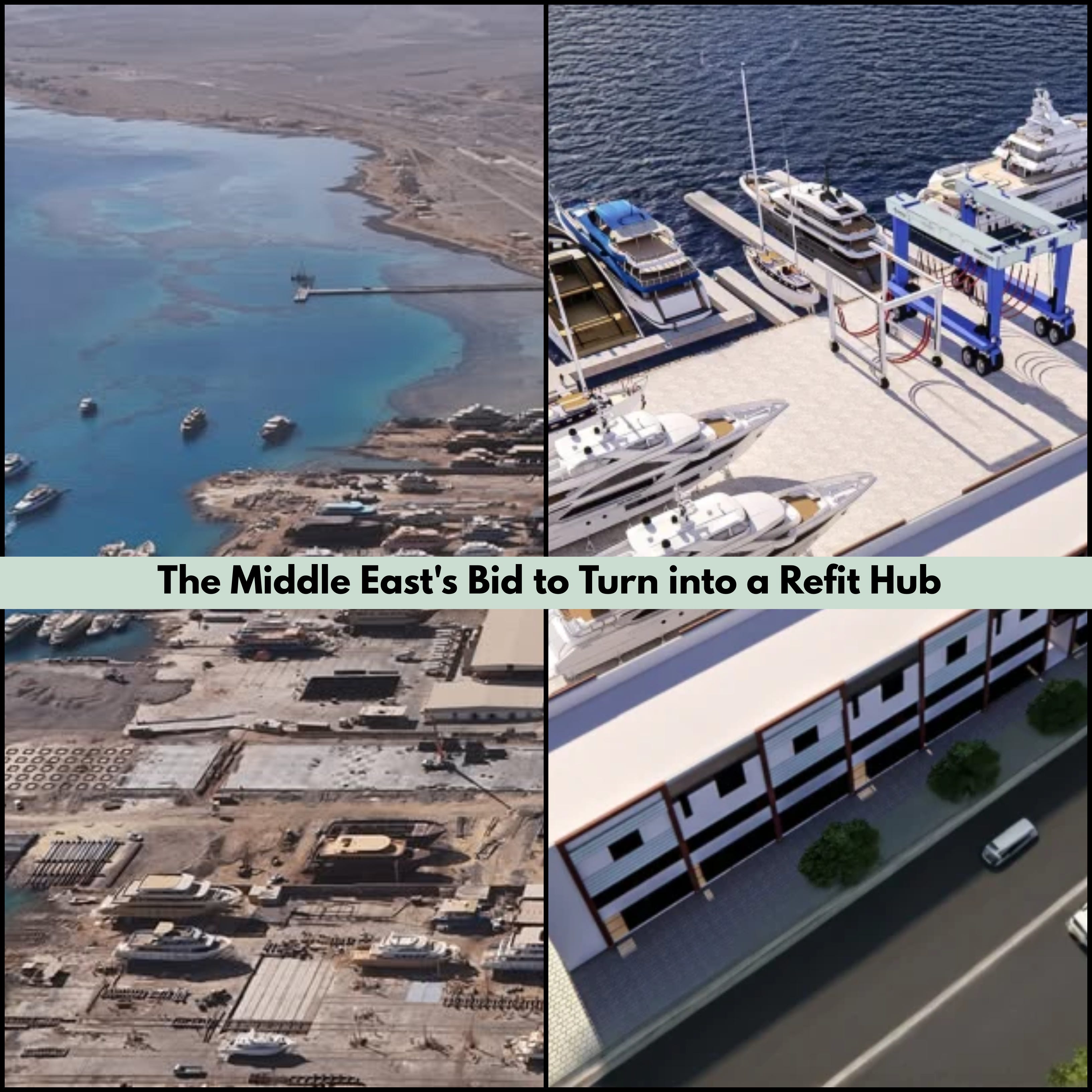
No one would’ve considered servicing their yacht in the Gulf.
At least back then. But now, with the Middle East transforming into an emerging market, superyachts have an alternative winter destination to cruise, one that has invested in infrastructure and streamlined regulations to attract foreign-flagged vessels. And, since the yachts coming in would need to have a place to be serviced, the notion of planning the refit of a vessel in the region started to have legs. From there, this concept would continue to gain currency as a host of service centers in Egypt, Qatar, and the UAE were announced, planning to turn both the Red Sea and Arabian Peninsula into a destination for yacht maintenance and upgrades.
Zooming out some more, the Middle East is capitalizing on a thriving wider refit market. No longer the back-burner sector it was once regarded as, the refit market is now seen on par with its new-build cousin, thanks to a surge in demand for its offerings. Where the past five years, ranging from 2019 to 2023, posted an average of 1,450 refit trips per year for vessels over 30 meters in length, 2024 in itself reported 2,200 refit yard visits, according to the SuperYacht Times Monaco Yacht Show Market Report. Pinpointing the reason for this growth primarily stems from the fact that there is a growing fleet, partly owing to the pandemic and the rise in Ultra High Net Worth Individuals purchasing builds. But looking inward, there are many streams that feed into the river that is now a refit boom. And to see if the Middle East can capture a share of the refit market demand, you need to understand the evolution of this dynamic sector.
From Necessary Expense to the Hottest Ticket: The Evolution of The Refit Market
Refitting a yacht, which encompasses everything from maintenance to full-scale conversion, categorized in three distinct periods: maintenance, yard, and refit, has historically carried a perception of being a necessary undertaking, not a task an owner would clamour to venture into, but is requisite to ensure the continued operation of a vessel. Going deeper, this perception of refitting was often belied by the notion that service work felt antithetical to the reasons why someone would own a superyacht.
‘Even though most owners are very nimble business people, a yacht is not something they want to think about from that perspective, and so when we talk about refit and when we talk about maintenance, it brings that kind of business reality to this asset, which is also a lot more than an asset, it’s a dream,’ says Norina Edelman, CEO and Co-founder of International Marine Management and Dockside Management. ‘It’s an intangible good for the owner. And so I think that brings a real complexity to refit because it forces that kind of bringing back to earth, that this is an asset that has to be kept up.’
In recent years, keeping up with this asset has become more nuanced, thanks to the growing size and complexity of today’s builds. The number of superyachts has metastasized, too. According to the SuperYacht Times report, 6,174 superyachts over 30 metres are in operation as of August 2025, up from 5,695 in 2023 and 5,325 in 2021.
The refit market benefits in two ways: an expanding fleet means more demand for maintenance work, and the number of yachts in the fleet has proliferated to a level in which waiting times have become protracted, therefore galvanizing prospective buyers to consider turning to the used market, which can then be remodeled to their liking. ‘The build market is so saturated that the time to wait for a new build is so long, that people who want to either increase in size or enter the market are saying “well, I don’t want to wait five years and so let’s buy something that exists in the market, and do a significant refit,” explains Edelman, who also emphasized the prodigious costs of purchasing a new-build has also incentivized buyers to look toward the refit option. ‘I think that to build a yacht has become a lot more expensive, and so it may have some people look at an alternative, which is still a very significant investment to buy a used one and then to do a significant conversion.’
In addition, there were new-build players, stirring for a new challenge, who slowly started to enter the refit space, offering services of their own. Among the shipyards are Germany’s Lürssen, which has slowly expanded its refit and repair facilities in the last decade, particularly with the acquisition of Blohm + Voss in 2016, and Dutch builder Feadship, which launched the “Feadship Refit and Repair” subsidiary company in 2018. Edelman sees the imprimatur of these builders’ foray into the refit sector as a difference maker, too. ‘You see a large expansion of some of the major build players into this market, which has given it maybe additional credibility with a certain segment of people,’ says Edelman. ‘I do think that by having these kinds of builders enter the market in a significant way has potentially also changed the way refit and conversion is seen as an option.’
All in all, the growing roster of yachts, which has unlocked the need for more places to cruise and berth, in part stems from a new owner demographic: younger and with different priorities, including exploring new locations. It just happened that the Red Sea and the Arabian Peninsula were among those destinations.
“To create a yacht hub, you must have maintenance. You cannot have a true developing hub if there is nowhere to get things done.”
Middle East Superyacht Offerings
Take a look at the wider luxury sector, and you will notice that buyers are getting younger. This was first gleaned in 2018 when the University of Monaco, in collaboration with Italian shipyard Rossinavi, observed a drop in the average age of a yacht owner, falling by 10-15 years. In other words, millennials have entered the market and carry different values: they prioritize experience over material gain and, as a result, are eager to seek new cruising grounds to explore.
‘The profile of an owner changed. We’ve kind of gotten away from the traditional or old-fashioned notion of the yacht doing Monaco and St. Tropez and then the Caribbean back and forth, maybe hit the U.S once in a while. That’s not what people want to do anymore,’ acknowledges Edelman, whose outpost in the Caribbean is experiencing a refit boom of its own thanks to this phenomenon.
‘As people look to circumnavigate, to spend more time in the Pacific, they need an option for maintenance, refit, and repair outside of what has been the traditional refit hub of Europe. And that is one of the things that has driven us to develop where we have, it’s also one of the things you see is driving potentially the building of a refit hub in the Middle East.’
Staying in 2018 for a moment longer, it was a time when Saudi Arabia expressed plans to open the Red Sea coastline to yachters for the first time. Following the formation of the Saudi Red Sea Authority in 2021, the Kingdom issued Large Yacht Chartering licenses to promote marine tourism, while on the other side, Egypt announced plans to utilize the Suez Canal and changed policies to accommodate the business of foreign-flagged vessels. With the anticipated surge in superyacht traffic, the next logical step was for the region to provide facilities to service them.
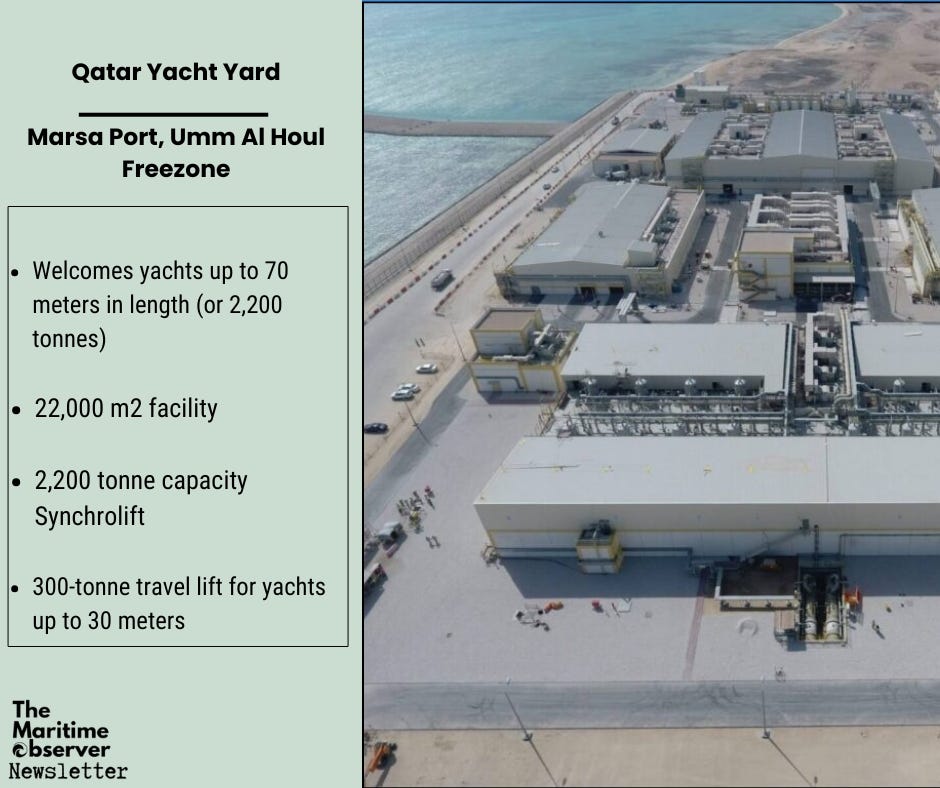
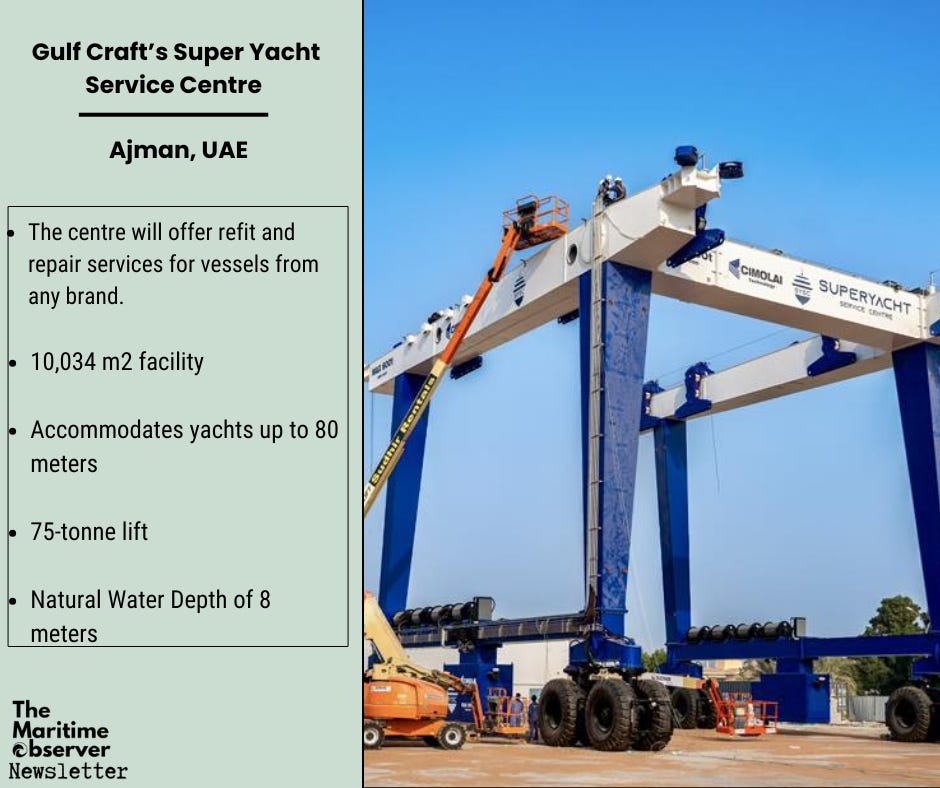
‘To create a yacht hub, you must have maintenance. You cannot have a true developing hub if there is nowhere to get things done. And so I think both the development of the projects and the projects understand that. If there is a big investment in bringing yachts there, then it makes sense for the refit people to follow,’ says Edelman. Among the locations announced are Qatar’s Yacht Yard in Umm Alhoul, which has recently inked a deal with Feadship to develop Marsa Port as a superyacht destination. Gulf Craft, the UAE-based shipbuilder, is nearing plans to cut the ribbon on the SuperYacht Service Centre in Ajman, UAE, a 10,034 m2 space which will service yachts from any shipyard.
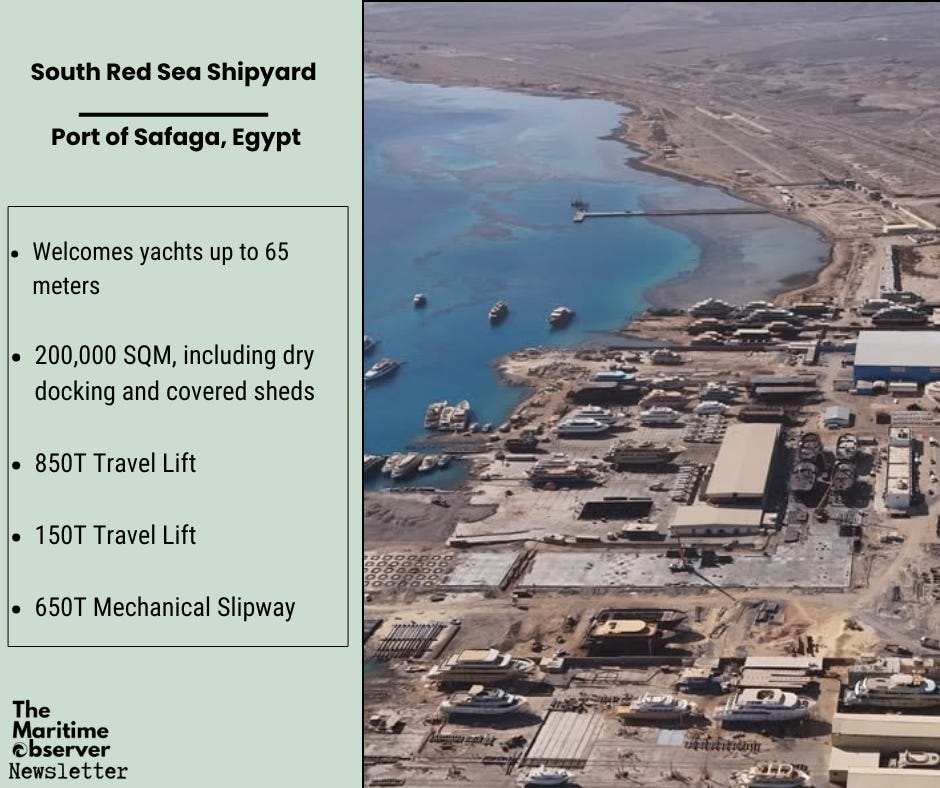
Meanwhile, over at the Red Sea, there is the South Red Sea Shipyard in Port Safaga, a facility dating back to 1910 with new build and repair capabilities. The shipyard counts about 850 employees operating in a 95,000 sqm dry docking area. The shipyard benefits from the developments happening over on the other side of the Red Sea and the wider region.
“With the development of the NEOM city in Saudi, the rapid growth of Abu Dhabi ports and DP world or the major role the Suez Canal plays in day-to-day shipping operations, such developments and existing facilities demands effective, efficient and safe refitting facilities to host the operating vessels” says Ryad Eldogueshy, Head of Yachting department and Board Member, South Red Sea Shipyard, who, however does not yet see this area reaping the rewards of the younger demographics entering the owner club. ‘The Middle East has not yet witnessed demand from younger clients in comparison to Europe and the Americas; most yachting clients remain from the traditional demographic and renowned UHNWIs.’
But regardless of the owner or type of vessel coming in, pick the brains of anyone in the refit business, and one thing becomes clear: it is an industry that comes with a bevy of challenges.
Perception, Pricing, and Skilled Labour: The Challenges of the Refit Market
Naming the revolving door of setbacks or issues that can arise from the refit experience can be interminable: supply chain delays, a demanding time frame, trying to keep up with the advancements of the new-build sector, the lack of standardization, and high requests for refit slots are some examples. And while this sector can provide a bounty of work to local economies, one common headwind remains: the dwindling availability of a quality workforce. And this frustration of finding skilled labour ultimately ties into a perception of the industry overcharging for its offerings. ‘I think many people - owners, family offices and owners’ representatives - have felt that pricing was unfair and as a result, there is left this sense that anyone in the yacht market is trying in some ways to overcharge. And that has created a real problem with pricing. And this goes back to skilled labour,’ says Edelman, citing the example of multiple industries competing for the same workforce. ‘A welder who is going to work in nuclear facilities, let’s say, is going to be making more than double what any refit yard could pay based on what we can charge our clients. How do we expect to compete for the good welders?’ To that end, Edelman advocates a correction in pricing. ‘We need to recalibrate what our fair prices are for things, and change this perception that we’re overcharging. Because I think, actually, in many cases, we are undercharging for the level of skill that we’re requesting. And also for the level of service we are requesting.’
Future Outlook
At the end of the day, what separates a thriving regional refit sector from others that have not found success can be distilled to one trait: adopting a long-term outlook.
‘If you measure success by short-term profitability, it is not for you to do this development. It really needs to be asked: what version of profitability are they looking for? Is it to get the best returns over 12 months? If so, this doesn’t make sense. If it’s to get the best returns over 15 years, then maybe it makes sense.’ says Edelman, who stressed the importance of nurturing tomorrow’s talents in this purist. ‘But in order to do this well, in my view, in an up-and-coming area or a new area, you must invest significantly in bringing in labour from outside. You can’t pass 100% of that cost onto the clients if you want to develop a region; otherwise, you will be out of market pricing. It requires investment into apprenticeship programs, etc, which is an investment. It’s an investment that will, of course, have returns, but not immediately.’
In tandem, Edelman posits that the value of a network of subcontractors is paramount for establishing a thriving superyacht destination, a challenge her own facilities have had to face. ‘In the South of France or in Barcelona, you call your very large network of subcontractors who come. Where we are, we have to develop that labour force; it’s not the same thing. Your project managers don’t have somebody to call; they need to know. And so you’re going to see the exact same thing in the development of the Middle Eastern facilities.’
So, whether it is new-build or refit, the superyacht industry is not one that brooks failure. And although the aforementioned obstacles blend in with the brickwork of the refit industry at this point, for a seasoned leader like Edelman, who, with 15 years of experience under her belt, views this as a catalyst for success. ‘It is just challenging; it is challenging to deliver the level of excellence to such demanding clients, and that’s what drives us, the notion of service and excellence.’
And with the effort put in by the stakeholders of the Middle East region, who understand the value that these services will bring, it seems as though it won’t take long before refit slots start to fill up for those who are crossing the Arabian Gulf or Red Sea. Because, to quote Edelman, the demand does not look to be subsiding anytime soon. ‘The market is growing. There will always be people who want to do major work. You will always have that standard cycle of surveys that have to be done.’