

Some geopolitical events and how they are dealt with within the superyacht community can alter the course of the industry. The COVID-19 pandemic brought a sales boom, while Russian sanctions wiped out a category of yacht buyers from the market, with buyers from other nationalities replacing them.
As for the Iran-US conflict, its long-term ramifications are yet to be seen. But if one thing is clear, the Middle East market is not capitulating to the circumstances. This month’s feature story examines how the Red Sea and Arabian Gulf felt the effects of the conflict, and what its extended ramifications mean for the coming season, following the announcement of a peace deal.
Please note there have been more developments in Iran-US relations post-ceasefire. These have transpired after this story was finalized.
Marina developments from Oman, Morocco and UAE occupy the news front, while Dubai Maritime Authority rolls out a 24/7 yacht marina transfer service.
Thank you for reading,
Faisal
faisal@maritimeobserver.com
“A resilient market” - Assessing the long-term impact of the Middle East Superyacht Sector following the US-Iran Conflict
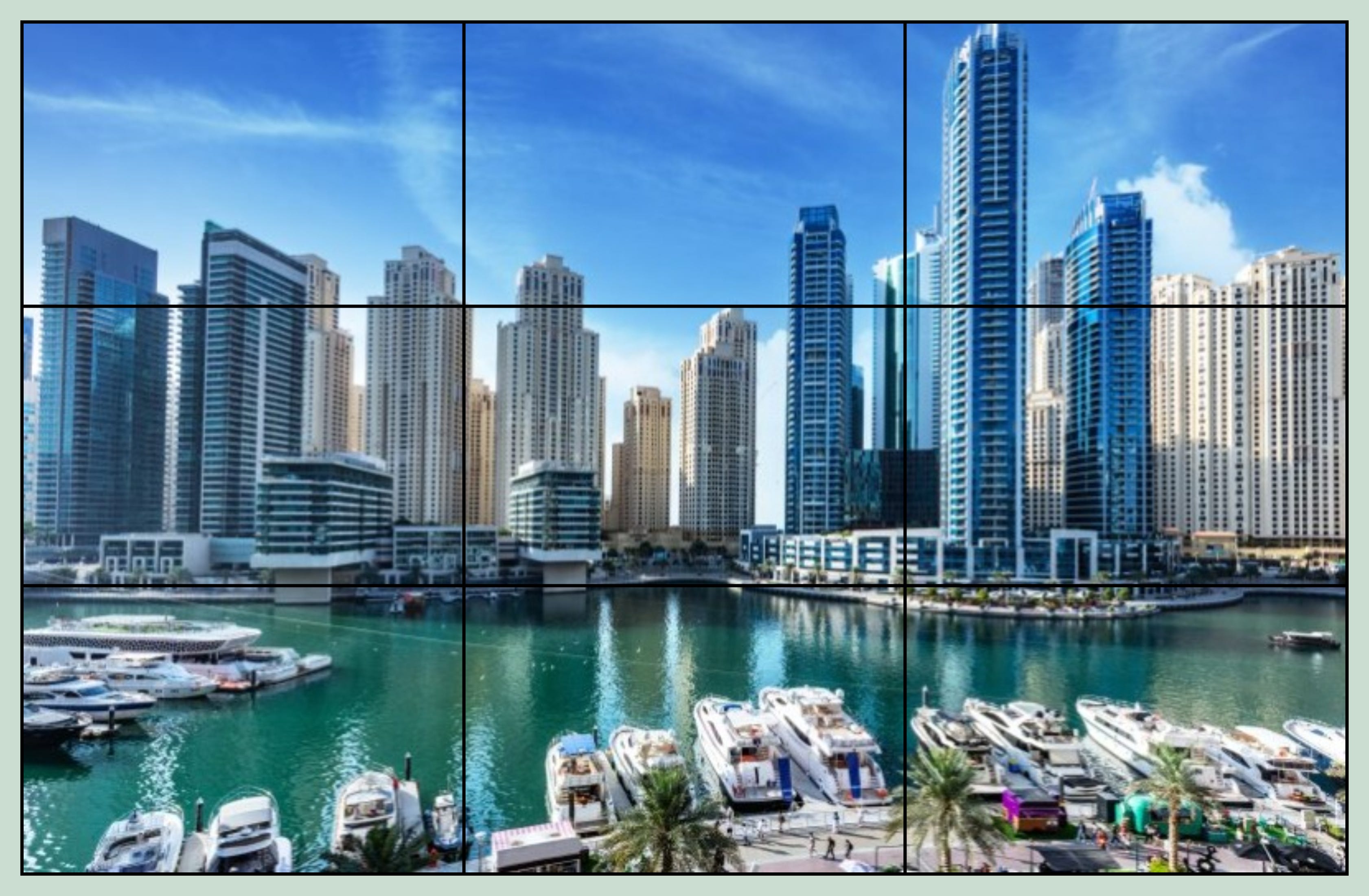
The Dubai International Boat Show was weeks away when the US-Iran war came into full effect on February 28th. With the Strait of Hormuz’s de facto closure restricting freedom of movement, as it brought heightened risk to vessels across the Middle East, the status of the biggest event in the region’s nautical calendar was up in the air.
Organizers at Dubai Harbour would ultimately have to wait a little longer before setting up tents and installing floating docks as, 11 days later, the decision not to move forward with the Dubai show on its original April date was announced.
For the local superyacht market, this was one example of the consequences wrought by the escalating geopolitical conflict, which has sent fuel prices spiking, insurance premiums surging, and charter demand softening.
The frequency of attacks would continue to wax and wane over the preceding months, impeding any superyacht activity, until June 19th, when the two states agreed to a Memorandum of Understanding. With ships resuming transit through the Strait, flow has been restored to pre-conflict levels, allowing for pleasure crafts to follow suit. But the question industry experts are poring over is whether the war has set in motion changes that will be hard to reverse for the luxury leisure marine industry.
How is the global yacht market dictated by world events?
“From an economic standpoint, yachting requires stability. When there are economic shocks in the world, it does have effects on the superyacht market, but also stability on the ground, to be safe for people to be able to actually visit those areas. It’s designed to be fun,” says Richard Lambert, Senior Partner at Burgess, a brokerage company with 19 offices around the world, including Monaco and Dubai. “Yachting does require confidence, and if there is a bit of a shock in the market, there is a bit of a lack of confidence.”
Historically, world affairs have been a catalyst in the trajectory of the yacht market, as Lambert explains. “Whenever you get a global shock, quite often you find, especially in the superyacht market, people take a little bit of a step back. They sit on their hands, maybe for a little while, just to evaluate what’s happening before they move forward. So there was a bit of a slowdown.” On the superyacht manufacturing front, the war’s economic scars have eaten into profits. In Ferretti Group’s quarterly earnings, the Italian builder’s revenue declined by 8.2% year over year, to €302.1 million, while its order intake plummeted by 33.6%. “We also had some delivery postponement linked to geopolitical tension in the Middle East region. In other words, some customers belonging to this area ask us to postpone the delivery in this area; we fully understand their desire, and this is a situation that now is solved step by step,” said Ferretti’s Chief Financial Officer Marco Zammarchi in May’s earnings call.
But this is not the first time the region’s mettle as a luxury hub was tested. And to understand the full context of its development, the continued maturation of yacht tourism in the Middle East over the last handful of years is instructive.
The Red Sea and Arabian Gulf: Obstacles faced by a cruising destination in the making
A recent study by Deloitte and Vrije Universiteit Amsterdam valued the global superyacht industry’s economic contribution at €54 billion, and maturing markets from Saudi Arabia to Egypt want a piece of that pie. “The region has pretty much started from scratch over the last 15 years. We’ve got to remember this has moved rapidly,” said Menelaus Kouzoupis, partner at Stephenson Harwood, on the first day of the 2025 SuperYacht Times Gulf Summit in Abu Dhabi. ‘It’s almost reaching the level where in some of the mature markets it’s taken a century to get there.” It speaks to the region’s wider efforts to become the ultimate winter destination for the global yachting fleet: The investment in infrastructure, updating of regulations to accommodate foreign-flagged vessels, and curation of attractive sporting events by emerging markets all pointed toward a promising decade for yacht tourism in the Red Sea and the Arabian Gulf. Curtailing these prospects, however, have been a number of security crises.
Security concerns permeating transit in the area have been a constant for the last 15 years. Piracy in the Indian Ocean during the late 2000s has burdened the Red Sea with a High-Risk Area (HRA) designation, which was later dropped in late 2022. Another safety crisis would follow in short order, after Yemeni Houthi Rebels attacked 20 vessels transiting the Bab El-Mandeb Strait, curbing momentum once more. In 2023, 34 yachts over 30 meters in length crossed Bab El-Mandeb, which would fall to 17 vessels the following year, according to The Superyacht Times Gulf Report.
The Hormuz Headache
When the Houthis withdrew attacks in October 2025, with the announcement of the Gaza Peace Plan, the region’s prospects to revitalize luxury yacht tourism seemed to be gathering speed. In 2025, the number of yacht crossings at Bab El-Mandeb rose to 28, a slight recovery due to improved conditions and guidance. “People were still taking security measures to make that passage, but it wasn’t deterring [them] to go. If you look at the market stats throughout the whole of the industry, you saw that there was actually a really strong start to 2026,” explains Lambert. When the US-Iran conflict broke out two months into the year, he says the impact was felt across the global yachting industry. “It wasn’t just affecting the Middle Eastern market for yachting. It did affect us globally. There was a nervousness to travel over towards Europe, especially from the Americans.”
While the leisure craft has never been a direct target, its proximity to drones, missiles, and GPS interference has been deemed a risk, prompting the pause of any superyacht traffic in the area. “Some of the weapon systems can’t distinguish between a big superyacht and a small military vessel particularly easily; the potential of a missile locked onto your yacht is definitely more of an option than it might have been in the past,” says Mike Wimbridge, Managing Director at Pantaenius UK. We haven’t seen too much yet of the yachts going around Africa. There’s just a disinclination to move.”
Although pleasure craft movement was restricted, it would be difficult to judge the war’s quantitative impact on yacht traffic, given that the timing of the war falls outside the traditional boating season, according to Chris Farrell, Director of maritime security company Neptune P2P. “Superyachts reacted very similarly to the rest of the industry. It wasn’t really in the superyacht season anyway, so they weren’t going to be passing, [it] tends to be seasonal, so they’re not passing through every single day of the year.”
Along with apprehension about physical safety, there was another sore point in making transit possible: insurance. “The Red Sea has really had a problem for the last 3 years. And the problem is the insurance. So although there weren’t that many hits and that many strikes, the insurance rates went through the roof,” said Captain Stephen Corbett, of JLS Yachts, a superyacht agency operating in the Middle East and the Indian Ocean, where his operations felt the strain. “Our traffic has certainly been down, and it affected my Saudi office. It also affects my Maldivian office; if they’re not coming down the Red Sea, they’re not getting that traffic, but they’re getting a bit of traffic from the Far East coming to the Maldives and then going back.”
In the early days of the conflict, if cancellation notices were not issued for policies covering Gulf transit, insurance premiums for vessels increased by 300% in some cases, according to yachting professional John Hermanson.
Even outside the water, the conflict created logistical challenges for a superyacht to operate smoothly. “One of the concerns that comes out of the superyacht space is owners, or the management companies, getting crew in and out of the region,” says Wimbridge. “And with the uncertainty around the airports, will I find myself as a superyacht owner in employment discussions because my captain has been stuck on board for 3 months, 6 months?” But with the peace deal taking place, there are signs that the clouds are beginning to clear over the industry.
The Diagnosis: Is it long-term damage?
One week after the pen was put to paper on the US-Iran ceasefire, shipping traffic has reportedly been recovering, with 125 transits recorded in the week of June 15-21. For the superyacht industry, this could spell a rebound of its own. Complicating this belief, however, is the question of whether long-term scars will affect the market’s future appeal.
“The Middle East is and always has been and will continue to be a very important market in yachting. And there may be a little bit of a blip at the minute while people are sitting back and just waiting; this will end at some point, and I think we’ll then see it continue to grow in the region,” says Lambert, who brings up Croatia as an example of a thriving cruising ground that has faced security concerns of its own in the past. “Look at Yugoslavia, the trouble that was there. And actually very quickly after that, [it] started to become a destination. I think that in people’s minds, as soon as they know it’s safe, they are happy to return.”
But if the past is prologue, a mosey through the geopolitical landscape over the past three decades, from 9/11 to Brexit and the Russian sanctions, illustrates that the superyacht industry has weathered stormy times before, and has come out stronger. In many cases, these straitened times allowed the market to adapt; one example was the changes made to the drafting of sale and purchase contracts for both the IYBA and MYBA associations following global events. “Those contracts are now fit for purpose to be able to deal with these situations, making sure that they are able to handle these sorts of shocks within the global market,” he posits. “When you go back to the GFC (Global Financial Crisis) in 2008, it did affect the market very much, but actually every single time that we’ve had this - a GFC and then COVID- it’s come back stronger.”
Despite the uncertainty, there remains a mindset of moving forward. “Once the gates open, will these yachts come back? We’ve had the straits closed before; we’ve bounced back and done well,” asks Captain Corbett, who is adopting a business-as-usual approach. “We have to stay positive. We still will be attending the Cannes boat show, and we’ll be attending Monaco. We haven’t changed our plans. We’re trying to target budgets for the 2026/27 season, and the market seems to be extremely positive.”
As the Dubai International Boat Show gets ready for its rescheduled November 2026 date, the event was able to find a silver lining in the uncertainty: it is now timed to take place at the start of the region’s yachting season and, as Lambert notes, may serve as a reminder of the market’s offerings. “There’s always been a strong appetite for yachting that’s come out of the Middle East. And we don’t see any sign of that actually changing.” The show must go on.
Correction: A correction was made to Richard Lambert’s title.
· Morocco’s Tanja Marina Bay International scheduled for summer 2026 opening
· Oman’s Barka Marina begins operations as part of $143 million waterfront development
· ORA Developers appoints AtkinsRéalis to master plan waterfront project BAYN
· Dubai Maritime Authority introduces 24-hour yacht-marina transfer service
· Gulf Craft appoints Sultan Salem & Sons as official dealer of SilverCat in Kuwait
· ENATA Group announces $20 million manufacturing facility; to be built in Abu Dhabi
·