
It hasn’t been smooth sailing for the region’s yachting ambitions, battered by the ill winds of piracy, regional tensions, and now, a full-scale war. The Dubai International Boat Show, originally scheduled for April, has been moved to November 2026, while superyacht-adjacent events in F1 in Saudi Arabia and Bahrain have been canceled. Every circumstance brings a silver lining, however, and the region will undoubtedly recover.
Straitened times won’t come in the way of the sectors refit market, where Gulf Craft is nearing the launch of its 10,000 sqm Superyacht Service Centre. And at the helm of the Ajman-based facility is Captain Patricia Caswell, who joins The Maritime Observer Newsletter to discuss her transition from the new-build side to her new General Manager post at the SYSC, the journey that led her here, and the virtues of a leader in any vocation for success in any field.
Thank you for reading,
Faisal
faisal@maritimeobserver.com

Turn left for servicing: With Gulf Craft’s Superyacht Service Centre, Captain Patricia Caswell plans to make refitting in the Middle East the norm.
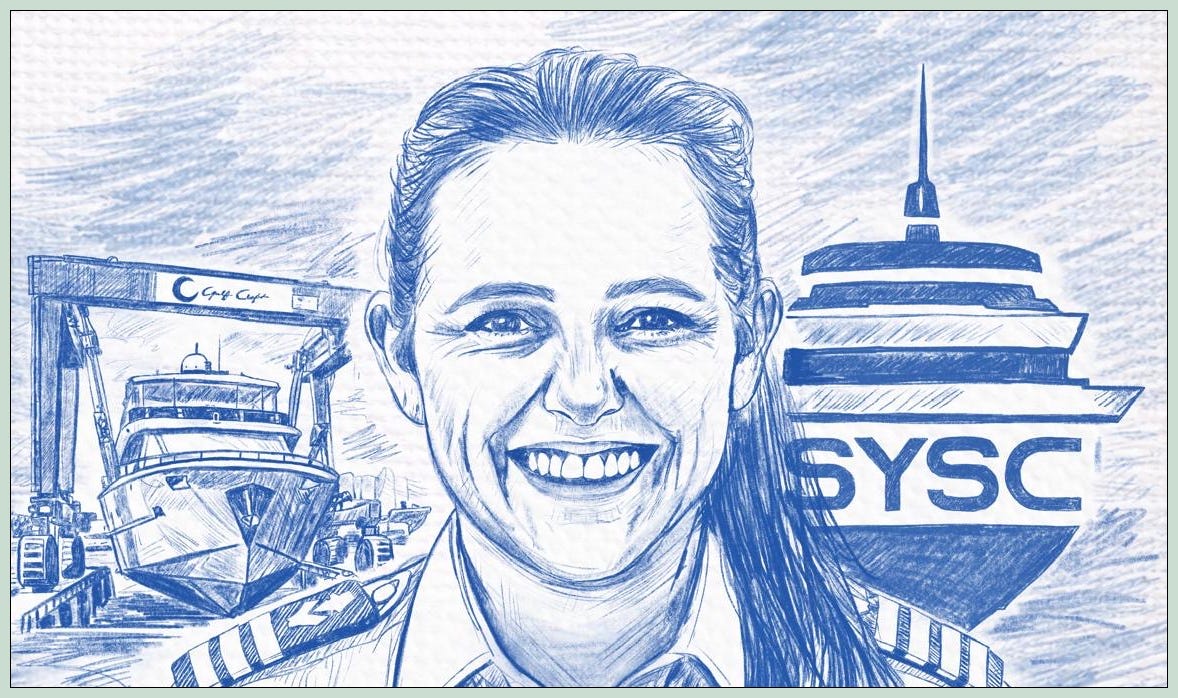
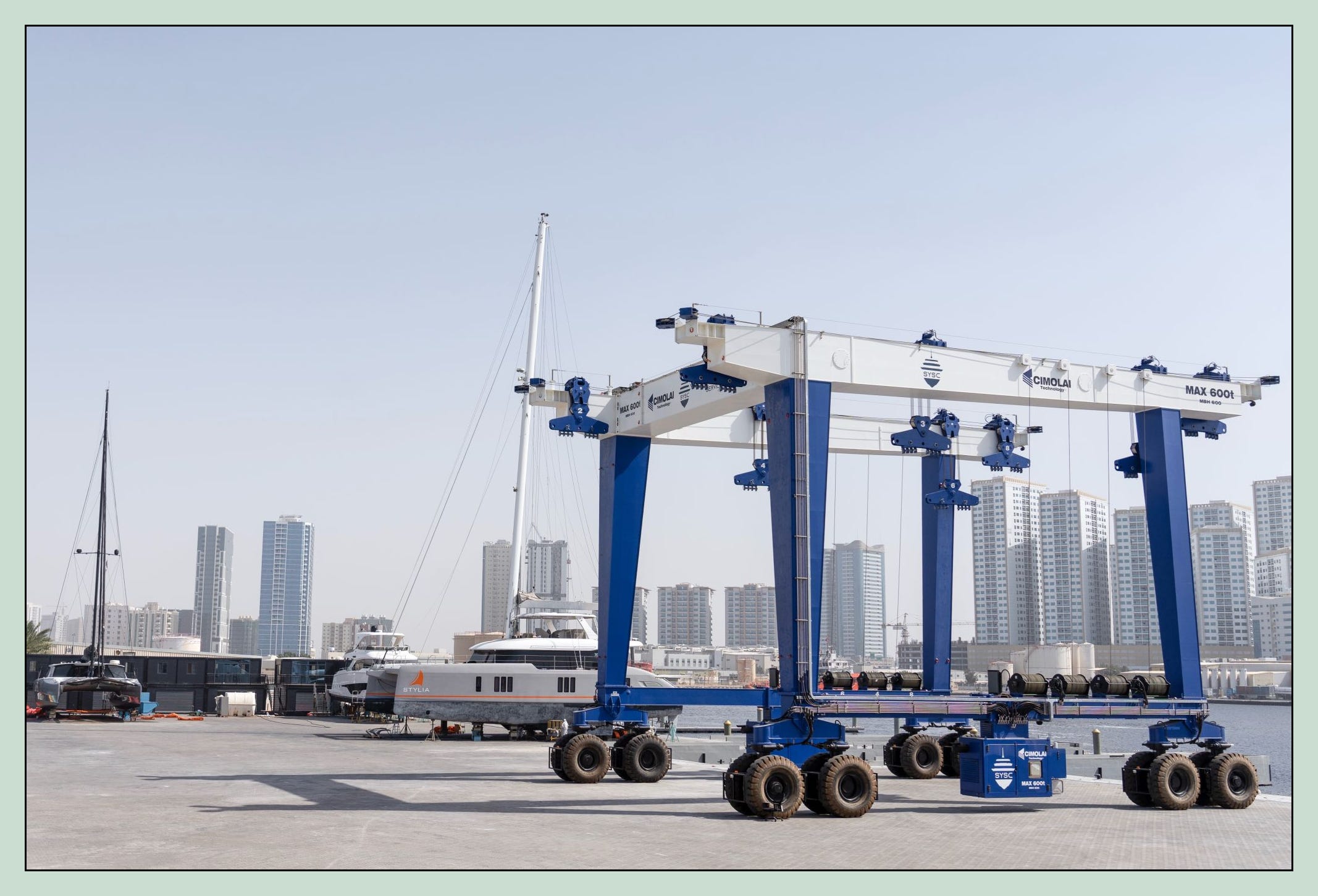
The newly built Superyacht Service Centre by UAE-builder Gulf Craft boasts all the splendors of a refit yard: a 600-ton Cimolai travel lift, a 75-ton lift, and deep water berthing at a six-meter depth, to name a few. The 10,000-span facility, situated in Ajman, UAE, reflects a broader appetite for refit and service works both in the Middle East and worldwide. But, in an industry where human connection trumps any other factor, perhaps the facility’s most impactful feature is the addition of an Australian captain with three decades of experience in the yachting industry under her belt and experience to offer by the boatload. If you have ever stepped onboard one of Gulf Craft’s luxurious vessels in the past five years, you can thank Captain Patricia Caswell for making sure it’s seaworthy and good to go. The same could be said for qualities as a leader throughout her storied career. Whether on land or at sea, she has always approached leading her teams pragmatically, developing mechanisms that have trained her teams to evolve and grow. And this will surely come into play as she gets ready to embark on a new chapter with the builder.
During her tenure overseeing the yard’s new-build operations, Caswell has witnessed the rise of Gulf Craft, which has become one of the industry’s most prolific yacht manufacturers, in step with the growth of the Middle East as a superyacht destination. She was behind the successful sea trials of the world’s largest composite-production superyacht, the Majesty 175, and was elected Vice Chair of the MENA Leisure Marine Association in 2024. Caswell now serves on the Association’s board.
Now, she’s taking on her next challenge, stepping into a new role as General Manager of the refit and repair facility. In this interview, Caswell explains why both the region and Gulf Craft are in the right place at the right time to introduce these offerings, outlines the attributes of a successful refit facility, and why this sector is now perceived as an alternative to new-build. And Caswell’s career trajectory up to this point proves instructive to the overall project.
Captain Patricia’s entry into the industry
Caswell resolved early on to become a maritime professional. “I did a day trip when I was fresh out of high school and then decided that this would be for me,” she says, working charter yachts in Australia shortly after. Her big break, like many in the trajectory of a career, arrived organically. After receiving a call from a friend with an unmistakable opportunity, Caswell was parachuted to the Caribbean in 24 hours and became the first mate of a 36-meter. The demands of such a position, which one might crumble under, were what instilled a quality of leadership in her. “There’s always pressure, and you need a bit of pressure in life to really rise to the responsibility,” she says, touching on the principles that would shape her leadership style to this day, whether it’s on land or sea. “It’s really leading from the ground with my team. Whether as a captain on a yacht, I would be out on deck washing down with the team, or if we’re out here in the yard, we’re looking at problems. It’s physically being a part of it so that you’re working hands-on with the team.”
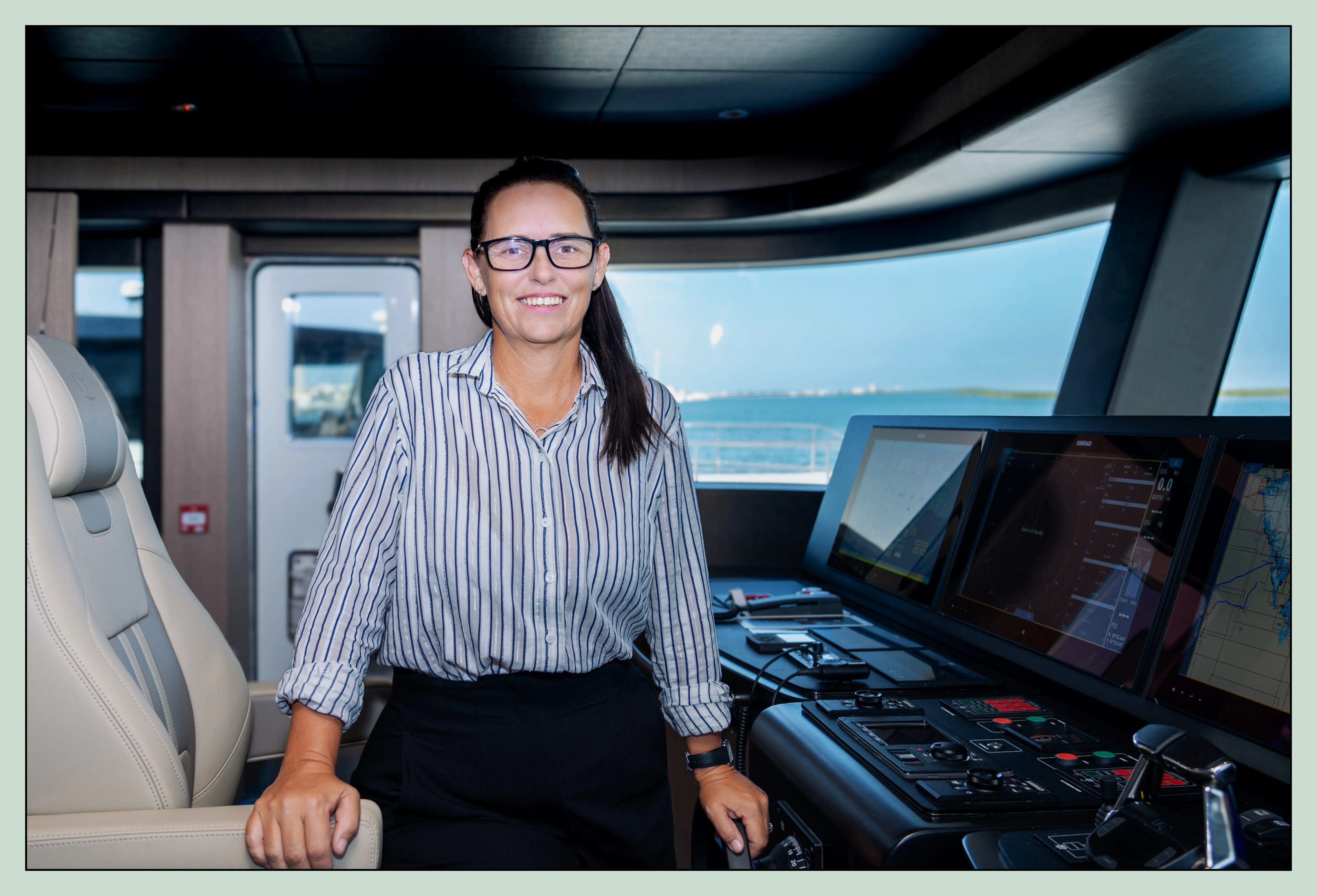
Eventually, Caswell made her way to the United Arab Emirates, where she worked on a fleet of yachts owned by a local family. Since that time, Caswell has had a front-row seat to the evolution of the Middle East as a cruising ground and could see the glimmerings of an emerging market. “The potential has always been there in what I see, but it’s been a pretty organic growth, and from the outside perception, a lot of people didn’t know what was already here, and I noticed that as a captain coming in.” Soon enough, Caswell would become instrumental in the region’s growth as a yachting destination.
The Shoreside Move
When it came time for Caswell’s next move, a post at Gulf Craft may not have been realized had her husband not noticed the job listing. “The Quality Control Manager position was advertised on a recruitment website in ‘oil and gas’, and I didn’t see it. My husband saw it actually, and he said, ‘Have a look at this, this could be interesting,’” she says. “At that stage, I reached out to the Gulf Craft team, and I came up to Umm Al Quwain to meet them, and it was just a match made in heaven. At the time, the Majesty 175 was coming out of production; they needed someone to take the helm of that for all of its sea trials and testing.”
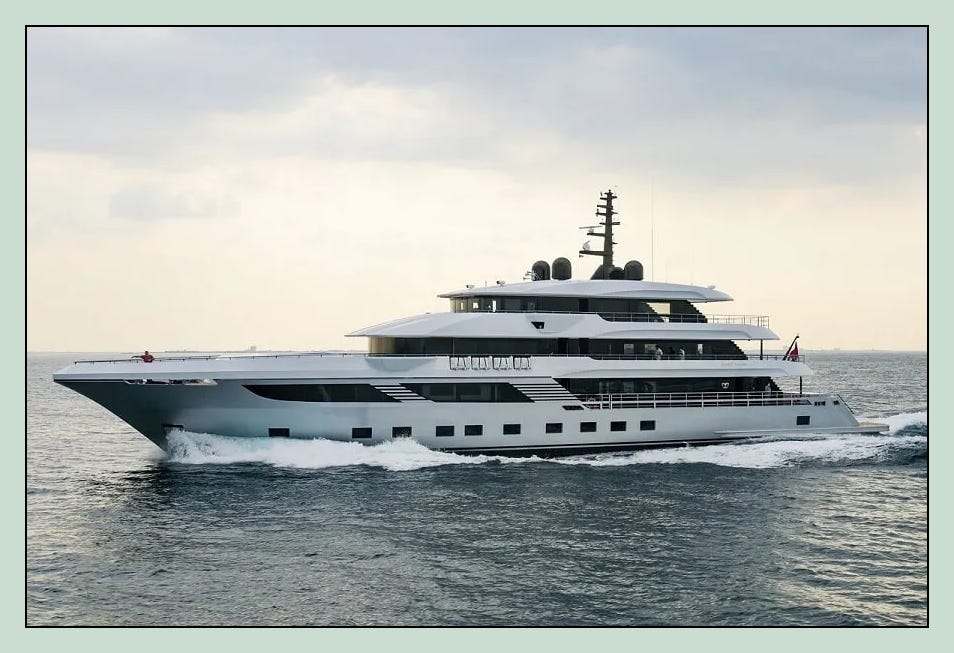
Arriving at the manufacturing side of the market, Caswell’s first impression of the sector reflected its state at the time. “I didn’t notice how much of the maritime sector was actually already here; the support services and the ecosystem that goes along with it. It’s expanded a lot in the last 10 years,” she says, while also alive to the elements needed to further the market’s maturation. “Support services, facilities, a supply chain, making sure that all of the parts are available to do the work, and professional setups so that the larger yachts feel more comfortable about being here.” With Dubai in itself offering 22 marinas and 3,750 wet berths, the region has been able to scale the infrastructure needed to accommodate these vessels, which have started to arrive, and a difference was discernible year on year. In 2022, the region recorded 129 superyachts over 30 meters in length, a 38% jump from 2021. Although a series of geopolitical events may have dampened superyacht traffic in recent years, it is clear that the demand remains for a new winter destination. With an influx of vessels cruising the region, there arose a need for owners to upgrade and maintain their fleets.
The Refit Market: No Longer a Secondary Option
Repair areas have become pivotal to nautical activity. An average of 1,450 refit yard visits per year was recorded between 2019 and 2023, only for that figure to climb to 2,200 trips in 2024, according to the Superyacht Times Monaco Report. There are multiple reasons for this. The first considers the increase in the number of vessels on the water. As of November 2024, there are 6,215 superyachts over 30 meters on the water, up from the 5,245 vessels in operation in 2021, according to the Superyacht Times. More yachts meant more demand for service work. And the tinder for this surge can be traced back to the pandemic, when the rise of Ultra High Net Worth Individuals (UHNWIs) and the need for isolation proved a boon for the superyacht industry.
With demand mushrooming and interest in yachting rising, Caswell believes that undergoing a refit has become a means of entry into the industry. “It can be an alternative to the new build, it can also be a lead into the new build, especially for first-time buyers. Maybe they want to buy something that doesn’t have the immediate financial implication of a new build of that size, and you want to refit things to your specific taste. I see that trend in first-time buyers going down that route,” she says, acknowledging that the protracted delivery dates in new builds also play a role. “I also see the trend in lead time. New build yachts slots were all booked up, you can refit a bit quicker than you can do a whole new construction sometimes.” Therefore, it was only natural for the region’s largest builder to use its knowledge of the market to extend its services to the influx of boats cruising in the area.
The Middle East Embraces Refit
When Caswell first joined the industry, the concept of offering yachting maintenance and upgrades in the Middle East would’ve died on the vine. Carrying out refit operations was not possible at the time, as its capabilities were not yet available, and the needs of a superyacht owner were not addressed in a sector where engineering was primarily catered to commercial vessels.
As the market continued to grow, the possibility of sending a yacht for service work in the Gulf began to gain currency, as Caswell explains: “It’s the supply chain. It’s also the confidence in a professional enough facility that can do everything from the technical side to the aesthetics.”
Caswell believes the shifting trends in cruising patterns are opening up a new world of possibilities to drive this market in the Gulf. “You don’t have to do just a Mediterranean season and close down for the winter. Why can’t you turn left? Why can’t you do your servicing and a second season? This is all possible.”
Meanwhile, in Caswell’s view, a marked change in client punctuality has further contributed to the Middle East’s growth as a superyacht hub. “I see a big evolution of that happening in this region, where owners are really starting to pre-plan and get organised for their next season and the next year. We started having inquiries looking at our slots for June and July already, instead of just arriving at the facility and saying, ‘Can you quote me for this?’ Which is how it was 5-10 years ago.”
The Conception of the Superyacht Service Centre
When the builder announced plans to open a refit yard at the Qatar Boat Show in 2024, an (figurative) asterisk appeared next to the announcement: Offering yacht maintenance is not foreign to the builder. Gulf Craft has always provided services for its existing fleet; the difference now is that the SYSC is open to non-Gulf Craft vessels as well. Why? “We had the talent in-house and the ability to do it, so we wanted to provide more support across the region,” says Caswell. “That’s why we wanted to differentiate what we do aside from the production side of the business.”
To prepare for the SYSC, Caswell didn’t have to look far to know what the facility would need. “I did a feasibility study on what is actually here before we look at what boats could come here in the future or what the cruising grounds are. It’s about supporting your local market first,” says Caswell, who predicts that the majority of demand will come from local owners. But she also believes there is a reason for foreign clients to visit the region for maintenance work. “People are even coming from outside regions to us because they know that we have the knowledge for air conditioning systems, for higher quality exterior finishes and systems. I’ve had a couple of service and refit clients come to us specifically because of our knowledge of harder-wearing systems and the testing that we do.”
But ask anyone in the business, and you’ll find out how running a refit facility is different from new-build operations. The refit business brings a host of challenges, from supply chain issues and a shortage of skilled labour to the complexities of managing a project across international waters. And this is before getting into the weeds of the work. “Sometimes you don’t know what’s behind a panel until you lift the panel off, right?”
But Caswell is more than equipped to take on the task. “In service, you need to be a little bit more agile, sometimes think outside the box a little bit. More so in refit. We have to combine both sides of that,” she says. “Being able to, when you first look at a project, pre-plan before a boat even comes to the facility is one of the most vital parts to successful refits.”
What of the fact that Gulf Craft holds a wealth of skill and talent in its current labour force? Can those new-build qualities be parlayed into refit? “They’re transferable, but also we build on that. The experience of working on different systems, different vessels, and different designs is important,” says Caswell, whose experience as Quality Control manager will prove an asset. “I look at things from a very in-depth technical perspective rather than just a business perspective, and also running yachts in the shipyards and refits around the world in my previous career; bringing all of that experience gives the facility a very practical, hands-on approach to it.”
Paving The Way
Looking at Caswell’s journey in retrospect reveals one constant: she has never shied away from embracing new challenges. And with all her success in the field, it may be easy to overlook the fact that she did so in a male-dominated sector, where females only make 2% of superyacht captains today, let alone when she first started at 21 years old. Whether in this industry or elsewhere, her advice proves valuable to anyone who feels like their ambitions seem far-fetched: “All the opportunities are there. You’ve just got to be strong enough and put in the hard work to go and grab it. Getting advice from mentors and people around you is important because it’s hard to know which way to turn.”
And maybe it is in Caswell’s daily worldview that the secret to her success resides. “I enjoy every day. I love being out around the team and being down in the yard with everyone, doing different things every day; even when it gets tough, and it’s a bit of a challenge.” It is safe to conclude that the region’s refit ambitions are in good hands with Captain Patricia at the helm.
Visit sysc.ae for more.